
In a fire, most people look down at the flames, at the exits, at the floor beneath their feet. But smoke moves up. It travels silently and rapidly through a building’s vertical spaces, reaching distant floors long before the fire does. And in modern buildings, nothing creates a more direct path for that smoke than the elevator shaft.
Every year, smoke inhalation accounts for the majority of fire-related fatalities, not burns, not structural collapse, but smoke. According to the National Fire Protection Association (NFPA), smoke inhalation is the leading cause of fire-related deaths, responsible for approximately 50–80% of all fire fatalities in the United States.
Yet one of its most dangerous features, the elevator shaft, remains one of the least-discussed vulnerabilities in building fire safety. A properly designed elevator smoke containment system closes that gap.
For architects, building owners, and safety professionals, understanding this threat is a responsibility to every person inside that building.
What Makes Elevator Shafts the Most Dangerous Place During a Fire?
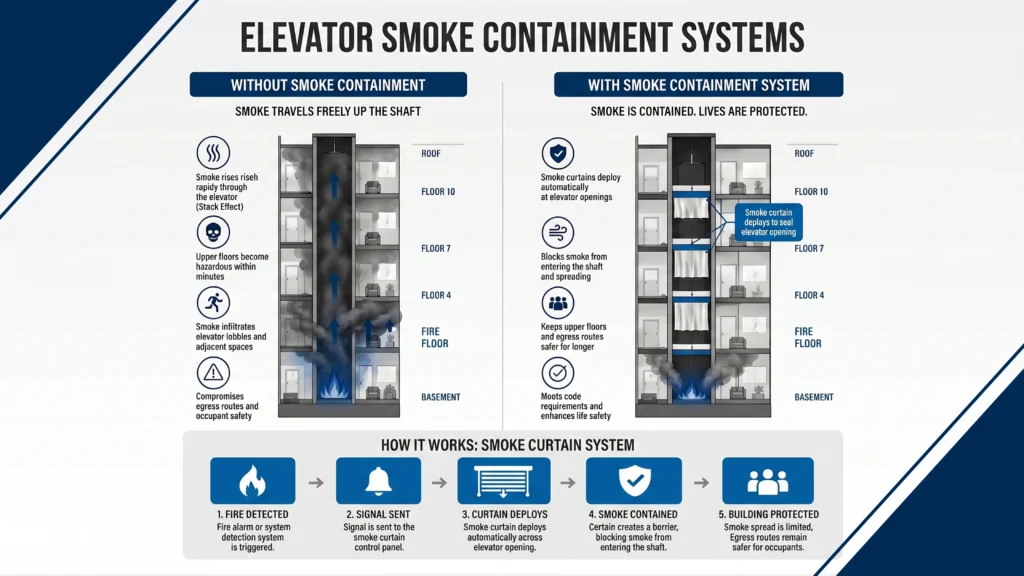
The primary reason elevator shafts pose such a significant risk is the Stack Effect. In simple terms, it describes how air, and in the case of a fire, smoke, moves vertically through a building.
When a fire occurs, hot air and smoke naturally rise. Elevator shafts act like chimneys, pulling smoke upward through the structure. As the temperature difference between floors increases, this upward movement accelerates.
This creates several dangerous conditions:
- Rapid vertical smoke spread: Smoke can move from one floor to multiple levels within minutes, using the elevator shaft as a direct pathway and bypassing conventional barriers
- Exposure of upper floors: Floors far from the fire source can quickly become hazardous, with reduced visibility and unsafe air quality affecting occupants who may not be aware of the fire below
- Smoke infiltration into adjacent spaces: Pressurized smoke can enter elevator lobbies, corridors, and nearby areas through gaps around doors, compromising critical escape routes and making evacuation more difficult
This rapid smoke migration in buildings is what makes elevator shafts particularly dangerous. Even if the fire is contained on one level, smoke can compromise the safety of the entire building.
Without an effective elevator smoke containment system, this vertical pathway remains open, allowing smoke to travel freely and unpredictably.
What is an Elevator Smoke Containment System?
An elevator smoke containment system blocks smoke from entering elevator shafts and spreading between floors. The most effective modern solutions use deployable barriers, commonly referred to as smoke curtains.
These systems are installed at elevator openings and remain concealed during normal operation. When triggered by a fire alarm or smoke detection system, the curtain deploys automatically, sealing the perimeter of the elevator door frame.
These systems are engineered for flexibility and reliability:
- They deploy quickly without requiring manual activation
- They integrate with building fire alarm systems
- They are designed to withstand high temperatures and pressure changes
Smoke curtains for elevators create a temporary but effective seal that limits airflow and prevents smoke from being drawn into the shaft. This directly addresses the root cause of vertical smoke spread.
How Smoke Curtains Protect Elevator Openings
Elevator openings are one of the most vulnerable points in a building during a fire. Without protection, smoke can easily enter through gaps around doors and spread into the shaft.
Elevator lobby smoke protection systems work by sealing these openings at the right moment. When deployed, the curtain forms a barrier that reduces airflow into the shaft and prevents smoke infiltration.
This has a direct impact on safety:
- Smoke remains contained on the fire floor for longer
- Vertical spread is significantly reduced
- Adjacent spaces remain safer for occupants
The effectiveness of these systems is often evaluated under standards such as NFPA 105, the Standard for Smoke Door Assemblies and Other Opening Protectives, which governs smoke door assemblies and leakage rates.
Properly installed systems must meet strict performance criteria, ensuring they function reliably under real fire conditions.
Why Elevator Smoke Containment Systems Are a Life Safety Priority
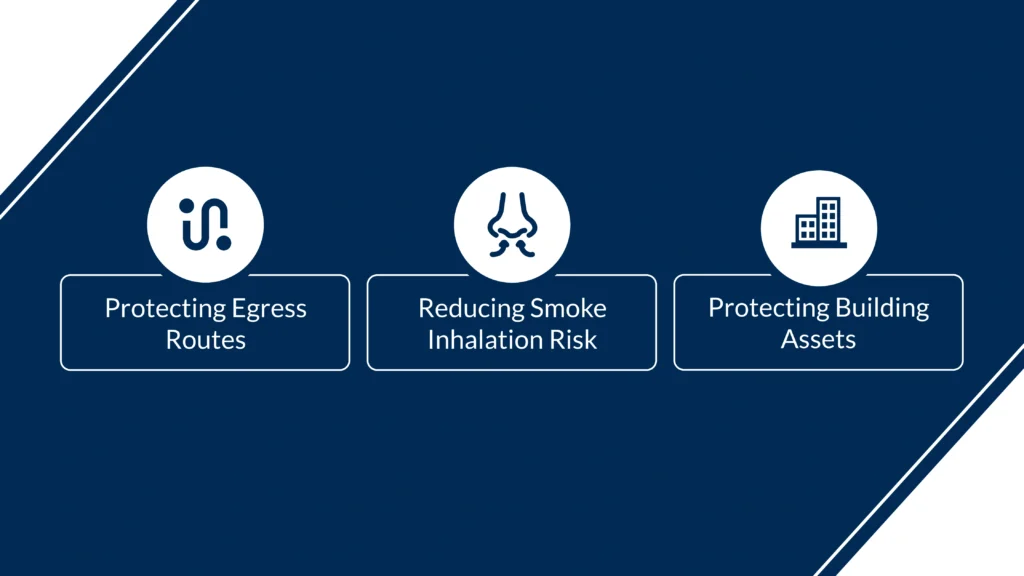
The value of an elevator smoke containment system becomes clear when you consider its impact on life safety during an emergency.
Protecting Egress Routes
Safe evacuation depends on clear and accessible escape paths. Stairwells and elevator lobbies are critical components of these routes. If smoke enters these areas, it can quickly make evacuation dangerous or impossible.
By limiting smoke migration, containment systems help keep these pathways usable for longer periods.
Reducing Smoke Inhalation Risk
Smoke inhalation is the leading cause of fire-related fatalities. Even occupants on floors far removed from the fire can be affected if smoke spreads through the building.
Containment systems reduce this risk by keeping smoke localized, protecting occupants who are not directly near the fire source.
Protecting Building Assets
Smoke damage extends beyond immediate fire zones. It can infiltrate HVAC systems, electronics, furnishings, and structural components across multiple floors.
An effective containment strategy helps minimize this spread, reducing long-term damage and costly restoration efforts.
Fire Safety Code Compliance and Regulations
Modern building codes increasingly recognize the importance of controlling smoke movement. Many jurisdictions now require specific measures to protect elevator openings, especially in high-rise buildings.
Codes such as the International Building Code (IBC) and standards like NFPA 105 outline requirements for smoke containment and door assembly performance. These regulations are designed to ensure that buildings can limit smoke spread and maintain safe evacuation conditions.
Meeting fire safety code compliance is not just about avoiding penalties. It ensures that the building performs as intended during an emergency, protecting both occupants and property.
The Importance of Design in Smoke Containment
Smoke containment performs best when it is planned at the earliest stages of building design. Waiting until later phases often leads to compromises, added costs, and reduced system effectiveness. Retrofitting an elevator smoke containment system into an existing structure may require structural adjustments, coordination with existing services, and redesign of surrounding elements, all of which increase complexity.
A design-first approach allows architects and engineers to align fire safety with building functionality from the start. Elevator shafts, for example, should be positioned and detailed with containment in mind, not treated as isolated components. The way these shafts interact with surrounding spaces can directly influence how smoke travels during an emergency.
Several critical factors must be considered during design:
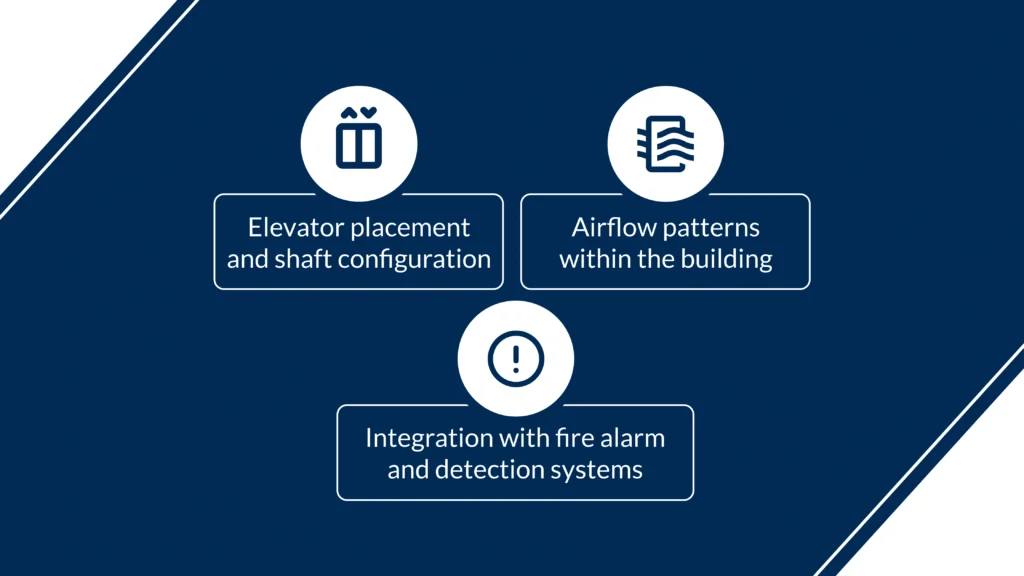
- Elevator placement and shaft configuration: The location of elevator banks and how shafts extend through the building affect vertical airflow. Poor placement can unintentionally accelerate smoke movement between floors.
- Airflow patterns within the building: HVAC systems, pressure differences, and open layouts all influence how smoke behaves. Understanding these patterns helps ensure containment systems are placed where they will be most effective.
- Integration with fire alarm and detection systems: Smoke containment relies on timely activation. Systems must be coordinated so that detection, alarms, and barrier deployment work together without delay.
An elevator smoke containment system should never be treated as a standalone feature. It is part of a larger fire-protection strategy that includes sprinklers, alarms, and compartmentation. When these systems are designed to work together, the result is a more controlled environment during a fire, improved occupant safety, and better overall building performance.
Why Building Professionals Trust Granite State Specialties for Smoke Barrier Solutions
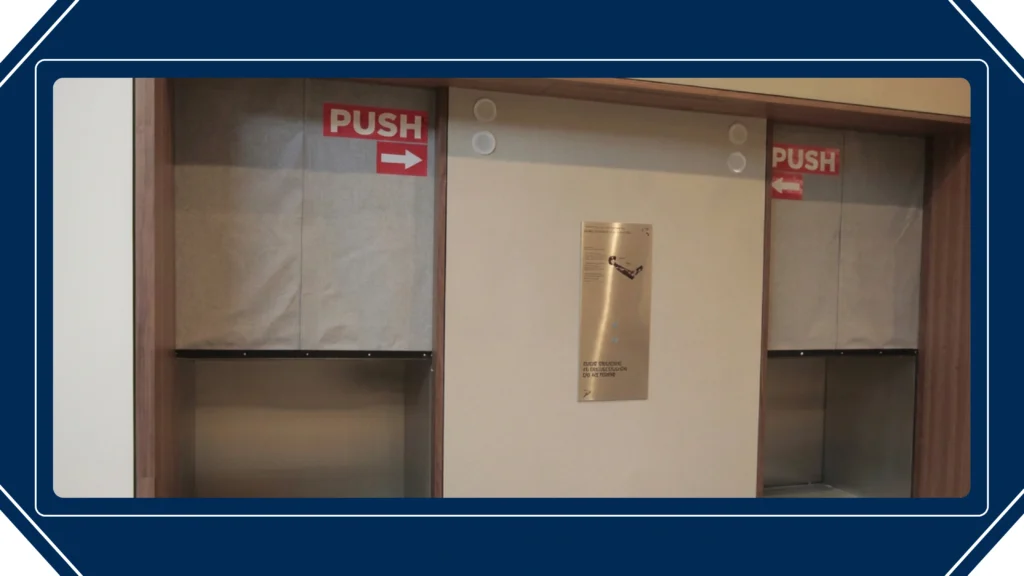
Granite State Specialties (GSS) provides specialized elevator smoke curtain solutions built for reliability, code compliance, and seamless integration across commercial buildings, hotels, and high-rise developments.
Our flagship product, the DSI-600 Elevator Smoke Curtain System, is engineered to meet the most demanding fire safety requirements, including:
- UL 1784 smoke migration and S label certification
- UL 10D fire protection rating, standard at 60 minutes, with optional 2 or 3-hour ratings
- ICC-ESR #4761 compliance and OSHPD approval
- LAFD approval for high-rise applications
What sets the DSI-600 apart is its practical, installation-friendly design. The curtain assembly requires as little as 7.5 inches of headroom, needs no heavy structural support, and is fully customizable to fit any elevator entry or exit point. A gravity fail-safe mechanism ensures deployment without relying on power, while a standard battery backup allows the system to be safely managed during an emergency.
The system integrates directly with a building’s fire alarm system, deploying automatically when an alarm is triggered and resetting once the emergency has ended, with no manual intervention required.
Get Reliable Elevator Smoke Protection for Your Facility from GSS
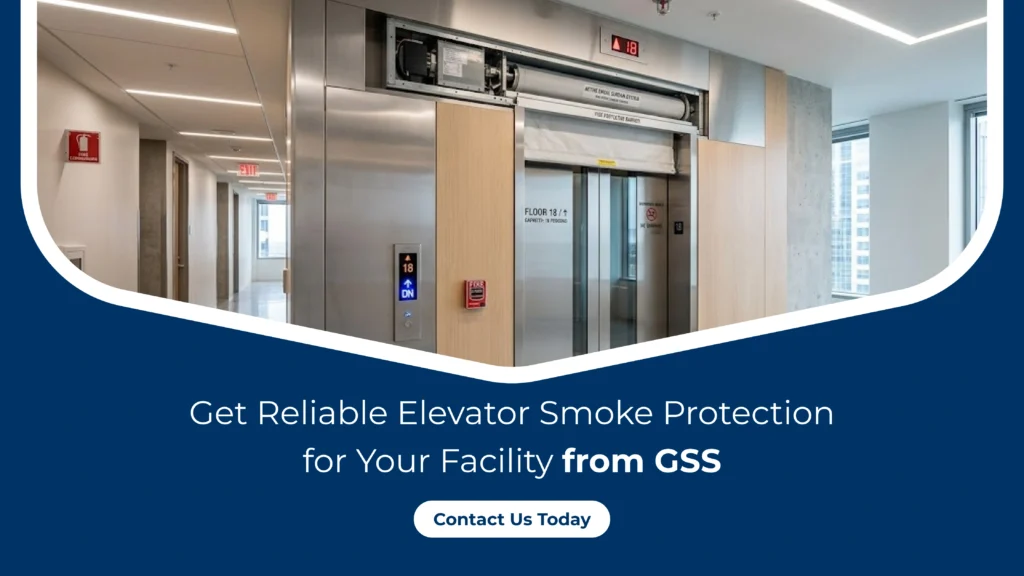
Elevator shafts are one of the most overlooked pathways for smoke spread during a fire. Addressing this risk requires a targeted approach that accounts for airflow, building design, and reliable containment at every critical opening.
GSS works with architects, contractors, and facility managers to deliver solutions that control smoke at its source, integrating seamlessly with existing fire safety systems while meeting all code requirements.
Whether you are planning a new project or evaluating an existing building, there is no better time to assess your exposure.
Is your building protected from smoke migration?
Contact GSS for an elevator smoke containment consultation.
FAQs
1. What is an elevator smoke containment system?
An elevator smoke containment system is a safety solution designed to prevent smoke from entering elevator shafts and spreading between floors. It uses deployable barriers, such as smoke curtains, that seal elevator openings during a fire.
2. Why are elevator shafts dangerous during a fire?
Elevator shafts act like vertical channels that allow smoke to rise quickly through a building. This can expose multiple floors to hazardous conditions within minutes, even if the fire is contained on one level.
3. What are the requirements for elevator smoke containment systems?
Requirements vary by jurisdiction, but most codes reference standards such as the International Building Code (IBC) and NFPA 105. These guidelines focus on limiting smoke leakage, ensuring proper deployment, and integrating systems with fire alarms and detection devices.
4. What does an elevator smoke curtain cost?
The cost of an elevator smoke curtain depends on several factors, including opening size, system complexity, integration with fire alarms, and installation conditions. Custom-engineered solutions typically cost more upfront but provide better long-term performance and compliance.
5. How much do elevator smoke containment systems cost overall?
Total system cost includes design, materials, installation, and integration with existing building systems. While pricing varies, investing in a properly designed system helps reduce long-term risks, potential code violations, and costly fire damage.