
Are you deciding between roller shades and solar shades for your office or commercial space? If so, you’re not the only one. Although these two window treatment options are popular and often compared for their similarity, they serve very different purposes.
Understanding those differences can have a significant impact on comfort, privacy, energy efficiency, and overall functionality.
When it comes to window treatments, the options can feel overwhelming, especially when two products appear nearly identical at first glance. One of the most common questions we hear at Granite State Specialties (GSS): what is the difference between roller shades and solar shades?
Both styles roll up neatly onto a headrail, both are available in a wide range of fabrics and colors, and both are popular choices for modern commercial and residential interiors. But that’s where the similarities end.
To fully understand “what is the difference between roller shades and solar shades,” it helps to start with how each fabric is constructed and the specific purpose it was designed to serve.
Roller Shades vs Solar Shades: Understanding the Core Difference
The biggest difference between roller shades and solar shades starts with the fabric itself. While roller shades are designed to block light and enhance privacy, solar shades use specialized mesh materials that filter daylight, reduce glare, and preserve outdoor views.
Roller Shades
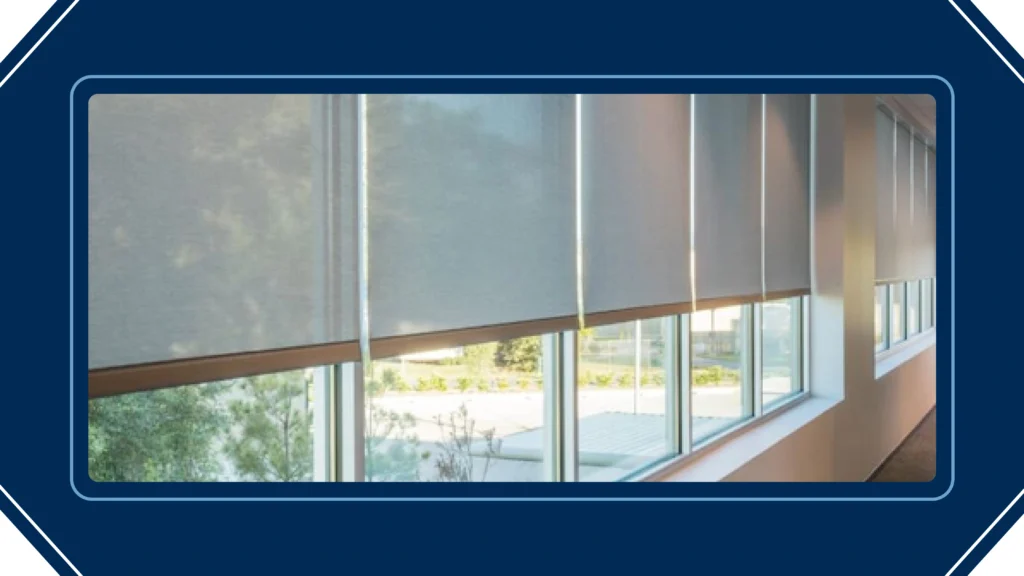
Roller shades are constructed from solid, opaque, or semi-opaque materials, typically vinyl-coated polyester or tightly woven fabric. Their primary purpose is light control and privacy.
At the extreme end, blackout window treatments use a fully opaque backing that blocks virtually all incoming light, making them a go-to choice for media rooms, bedrooms, and shift workers’ spaces. Even lighter opacities still provide meaningful privacy by blocking direct sightlines into a room.
This opacity is the first and most visible answer to the question of what is the difference between roller shades and solar shades: one is built to shut light out entirely.
Solar Shades
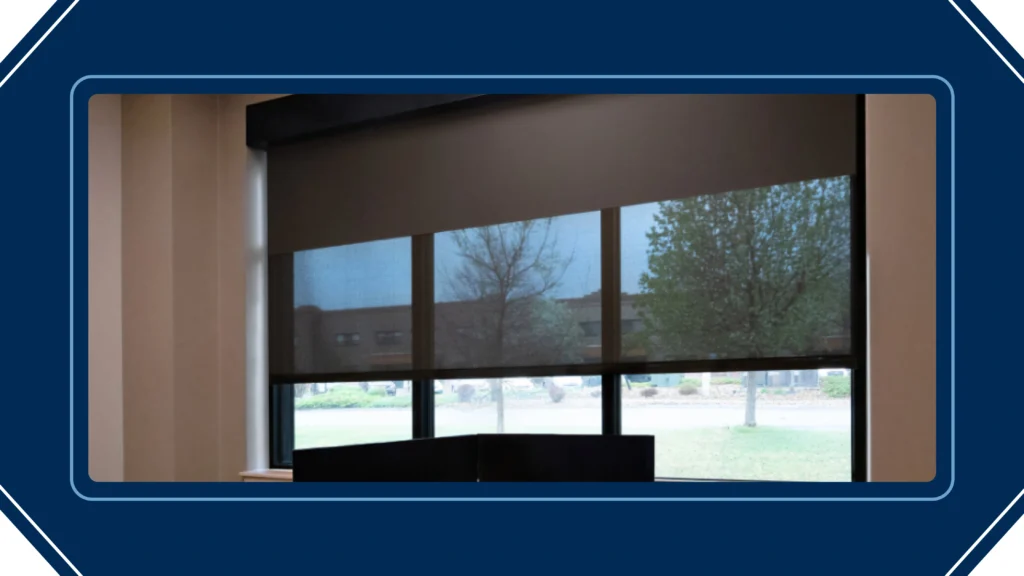
Solar shades are engineered from an open-weave mesh fabric. Instead of blocking light entirely, they manage and filter it. The openness factor, typically expressed as a percentage from 1% (very tight) to 14% (very open), determines how much light and visibility passes through.
A 3% solar shade, for example, will significantly cut glare and solar heat gain while still allowing occupants to see through the fabric to the outside. This balance between glare control and outward visibility is the defining characteristic of solar shades vs roller blinds.
Understanding this mesh construction is essential to answering the question of what the difference between roller shades and solar shades is at a functional, not just visual, level.
Privacy vs. Performance: Do You Need to Block Light or Manage It?
Here is the clearest way to frame what the difference is between roller shades and solar shades: it comes down to fabric density and intent.
- Roller shades block light: The denser the weave or the heavier the backing, the less light enters.
- Solar shades manage light: The mesh filters UV rays and reduces glare without creating complete darkness.
This distinction matters enormously for light filtration. With roller shades, you trade your view for darkness. With solar shades, you preserve the view while protecting occupants from harsh glare and UV exposure, a fundamental factor in long-term eye comfort and furniture longevity.
A Side-by-Side Comparison
The table below summarizes the differences between roller shades and solar shades across the factors that matter most to property managers and office administrators.
| Factor | Roller Shades | Solar Shades |
| Primary Purpose | Full privacy & light blocking | Glare reduction, view preservation |
| Fabric Type | Solid vinyl or opaque fabric | Open-weave mesh |
| Light Control | Total blackout available | Filters 1%–14% of light |
| Outdoor View | Fully blocked | Maintained (daytime) |
| Privacy (Night) | Complete | Minimal (reverse effect) |
| Best For | Bedrooms, media rooms, offices | South/west-facing offices, lobbies |
| Heat Reduction | Moderate (blocks conduction) | High (reduces solar heat gain) |
| Commercial Grade (GSS) | Fire-retardant, heavy-duty | Fire-retardant, heavy-duty |
When to Choose Roller Shades
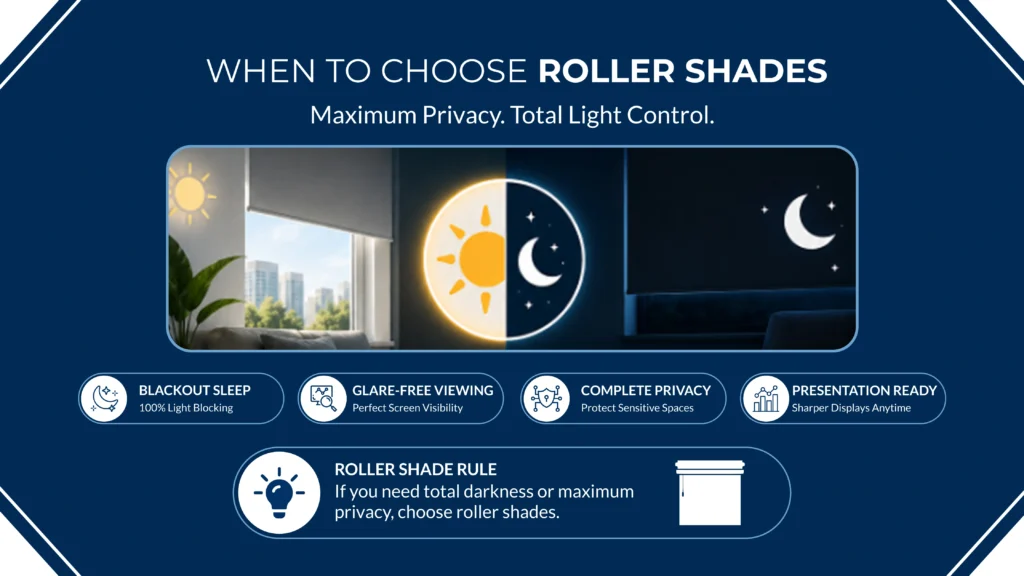
Roller shades are the right call when your primary need is total light control or strong privacy. Consider them for:
- Bedrooms and hospitality suites where guests need full blackout conditions
- Home theaters and media rooms where screen visibility depends on eliminating ambient light
- Healthcare or sensitive office environments where visual privacy is legally or operationally required
- Conference rooms that double as presentation spaces, blackout window treatments ensure projected content stays sharp regardless of outdoor conditions
For commercial spaces with heavy daily usage, it is critical to specify contract-grade fabric. Consumer-grade shades sold at big-box retailers are not engineered for the repeated cycling and cleaning demands of a commercial environment.
Knowing what the difference between roller shades and solar shades is makes it much easier to match the right product to south- or west-facing exposures where glare is the dominant problem.
When to Choose Solar Shades
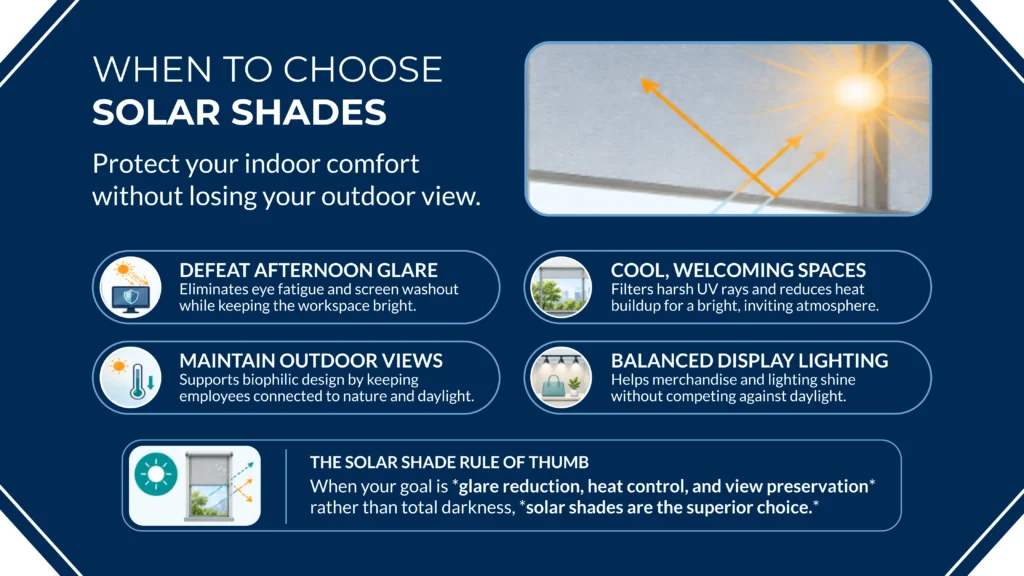
Solar shades literally shine in spaces where occupants benefit from natural light and an outdoor connection but cannot tolerate the heat or glare that come with it. Top applications include:
- South- or west-facing office windows that receive direct afternoon sun, where uncontrolled glare causes eye fatigue and computer screen washout
- Open-plan offices and collaborative workspaces where biophilic design principles call for maintaining views to the outside
- Lobbies and reception areas where you want a bright, welcoming atmosphere without uncomfortable heat buildup near the glass
- Retail showrooms where merchandise display lighting must compete with uncontrolled daylight
Human factors research shows that excessive glare from windows, overhead lighting, and reflective surfaces can contribute substantially to visual discomfort, eyestrain, and reduced visual performance in office settings.
According to CIBSE, workplace lighting guidance emphasizes the importance of controlling both direct glare from windows and reflected glare from screens and interior surfaces to improve visual comfort, reduce eyestrain, and support employee performance and well-being.
The GSS Commercial Advantage
Choosing between commercial window shades should never come down to price alone. With specialized GSS window treatments, every commercial shade, whether roller or solar, is specified to meet fire-retardancy standards required in commercial, healthcare, and educational occupancies.
Beyond compliance, GSS shades are built for high-frequency use. The mechanical components, brackets, clutches, and chain systems are rated for far more daily cycles than residential consumer-grade alternatives. This translates directly to a longer service life and lower total cost of ownership for property managers and facility teams.
For specialized environments, data centers, cleanrooms, healthcare facilities, or schools, explore our products, which include solutions engineered for demanding technical requirements beyond standard commercial use.
If you are still learning about all the options available, our overview of types of window shades walks through every major category, from roller and solar to cellular and Roman, to give you the full picture before you commit.
Make the Right Choice with GSS Window Treatments
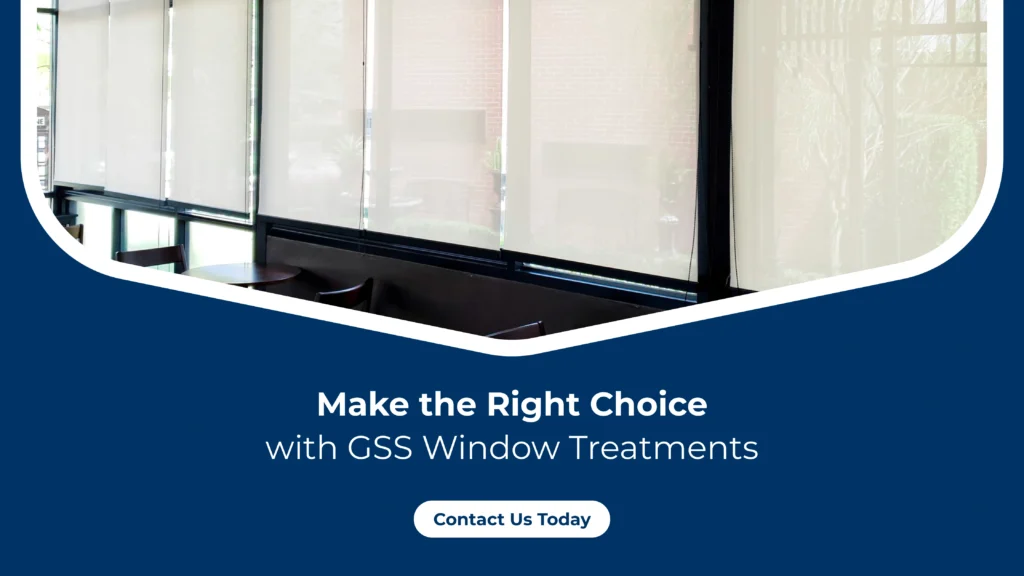
When someone asks what the difference between roller shades and solar shades is, the honest answer is that both are excellent products, in the right application. Roller shades win when darkness and privacy are the goal. Solar shades win when you need glare control without sacrificing daylight or the view.
In many projects, the best outcome is a combination of both, with solar shades handling perimeter offices and roller shades covering conference rooms and collaborative spaces.
The key is matching the specification to the actual light environment and the occupants’ daily needs, not defaulting to whatever is cheapest or most familiar.
If there is one takeaway from this guide, it is this: knowing what the difference between roller shades and solar shades is is not just a technical distinction; it is the difference between a space that works and one that frustrates the people in it every day.
Need help selecting the right window treatment? Contact GSS for expert measurement and commercial-grade installation.
Frequently Asked Questions
1. Solar shades vs roller shades, what’s the core difference?
The solar shades vs roller shades debate comes down to one fundamental question: do you need to block light, or manage it? Roller shades block light for privacy and darkness. Solar shades filter it, reducing glare while preserving your view.
2. What are solar shades?
Solar shades are window coverings made from an open-weave mesh fabric designed to reduce glare, block UV rays, and manage solar heat gain while preserving your view of the outdoors. The tighter the weave, the more light they block.
3. Do solar shades provide privacy at night?
No, and this surprises many buyers. During the day, solar shades let you see out while keeping people from seeing in. At night, when interior lights are on, this effect reverses: people outside can see in clearly. For rooms requiring nighttime privacy, pairing solar shades with a blackout roller shade on a double bracket is the standard commercial solution.
4. Solar shades vs. light-filtering shades: are they the same thing?
Not exactly. While all solar shades filter light, not all light-filtering shades are solar shades. Light-filtering shades soften and diffuse light without the view-preserving mesh construction that defines a true solar shade. If maintaining an outdoor view matters, solar shades are the right spec.
5. What are solar screen roller shades?
Solar screen roller shades are the technical name for what most people simply call solar shades, an open-weave mesh fabric stretched across a standard roller mechanism. The terms are interchangeable in most commercial specifications.
6. Solar shades vs cellular shades, which is better?
They solve different problems. Solar shades are built for glare control and view preservation. Cellular (honeycomb) shades are built for insulation and thermal efficiency, with no outward visibility. For south- or west-facing office windows, solar shades win. For energy performance in climates with extreme temperatures, cellular shades are worth considering.
7. Roller shades vs cellular shades: how do I choose?
If your priority is light control and privacy, roller shades are the simpler, more cost-effective solution. If your priority is reducing heating and cooling costs, cellular shades offer superior insulation through their air-pocket construction. Many commercial projects specify roller shades for interior offices and cellular shades for exterior-facing perimeter zones.
8. What do people say about solar shades vs roller shades?
A common theme in real-world discussions about solar shades vs. roller shades is the view-vs.-privacy trade-off. Most people who switch to solar shades in offices report significantly less eye strain at their screens, but are caught off guard by the nighttime privacy issue. Getting both right usually means layering: solar shades for daytime glare control, blackout rollers for after-hours privacy.