
In healthcare environments, infection control extends far beyond hand hygiene and surface disinfection. Every surface that patients, visitors, and staff touch has the potential to contribute to pathogen transmission, including one of the most frequently overlooked elements in a patient room: privacy curtains.
Studies have consistently identified privacy curtains as high-touch surfaces that can harbor bacteria and other microorganisms. Because they are handled repeatedly throughout the day yet cleaned less frequently than many hard surfaces, curtains can become an important link in the chain of cross-contamination.
This is why many healthcare facilities are turning to antimicrobial hospital curtains as part of a broader infection-prevention strategy. These specialized hospital cubicle curtains are devised to inhibit microbial growth while maintaining the privacy, durability, and fire-safety performance required in healthcare environments.
In this guide, we’ll explore the science behind antimicrobial curtain technology, its role in reducing contamination risks, and the practical benefits it offers hospitals, clinics, and healthcare facilities.
Why Hospital Curtains Are Considered High-Touch Surfaces
Hospital privacy curtains are among the most frequently handled surfaces in patient care areas.
Throughout a typical day, curtains may be touched by:
- Nurses
- Physicians
- Environmental services staff
- Patients
- Family members
- Visitors
Unlike bed rails, countertops, and medical equipment, curtains are often not disinfected multiple times per day. Research has shown that microbial contamination can occur rapidly after curtain installation, making curtain hygiene an important consideration within any infection prevention program.
For infection control officers, the concern isn’t simply whether contamination occurs. It’s about reducing microbial transfer between laundering cycles.
The Science Behind Antimicrobial Hospital Curtains
Hospital privacy curtains are one of the most frequently touched surfaces in a healthcare facility. Throughout the day, they are handled by:
- Healthcare workers
- Patients
- Family members and visitors
- Environmental services staff
Unlike bed rails, countertops, and medical equipment, curtains are not typically disinfected multiple times per day. In many facilities, they may remain in place for weeks or even months before being replaced or laundered.
That creates a potential infection control concern.
In a study conducted by researchers at the University of Iowa, hospital privacy curtains were found to harbor pathogens after just one week of use, highlighting their potential role in environmental contamination and cross-transmission within healthcare settings.
How Antimicrobial Hospital Curtains Work
This is where antimicrobial hospital curtains provide an additional layer of protection. Rather than acting like a disinfectant that instantly kills microorganisms on contact, antimicrobial fabrics are developed to inhibit microbial growth on the curtain surface, helping reduce bacterial buildup between scheduled cleaning cycles.
Their purpose is to:
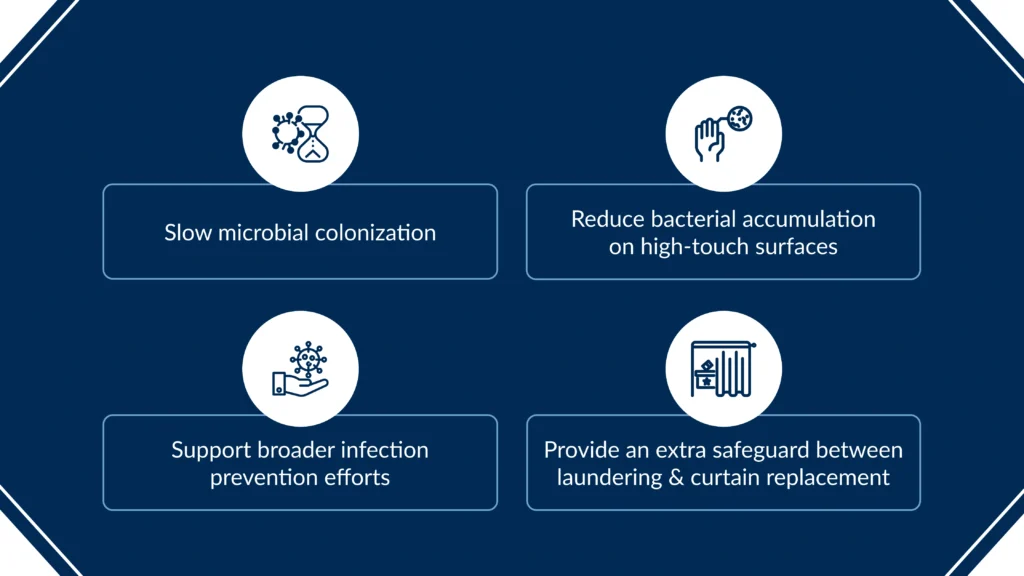
- Slow microbial colonization
- Reduce bacterial accumulation on high-touch surfaces
- Support broader infection prevention efforts
- Provide an extra safeguard between laundering & curtain replacement
The goal isn’t sterilization. The goal is maintaining a cleaner, lower-risk surface in an environment where every touchpoint matters.
Types of Antimicrobial Hospital Curtains
Depending on the product, this protection is typically achieved through technologies such as:
1. Silver Ion Technology
Silver has long been recognized for its antimicrobial properties. When incorporated into healthcare textiles, silver ions interfere with essential cellular processes inside bacteria, making it more difficult for microorganisms to grow and reproduce.
As a result, bacterial populations develop more slowly on the fabric surface, helping maintain lower contamination levels over time.
2. Permanently Bonded Antimicrobial Treatments
Some clinical-grade curtains use antimicrobial agents permanently integrated into the fabric fibers during manufacturing.
Because the treatment becomes part of the textile itself rather than a temporary surface coating, the antimicrobial properties remain active throughout the curtain’s service life, even with repeated use and handling.
Importantly, antimicrobial curtains are not designed to sterilize a patient room. Their purpose is to continuously suppress microbial growth and help reduce contamination between routine laundering and maintenance cycles.
Benefits of Antimicrobial Hospital Curtains
Antimicrobial hospital curtains do more than support infection prevention. They can also improve the overall performance, longevity, and maintenance efficiency of privacy curtain systems in healthcare environments.
Key benefits include:
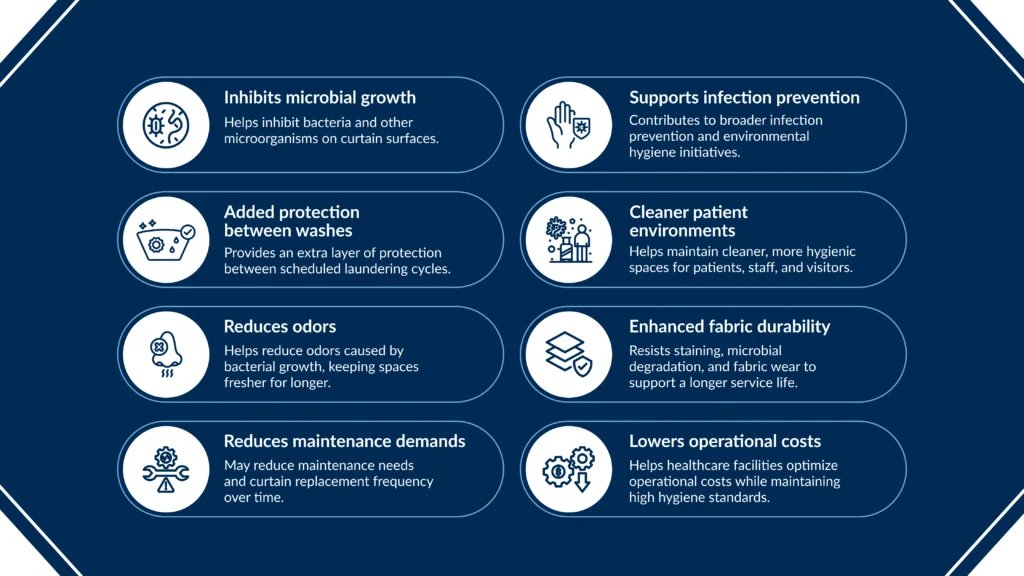
- Inhibits mcrobial growth
- Supports infection prevention
- Added protection between washes
- Cleaner patient environments
- Reduces odors
- Enhanced fabric durability
- Reduces maintenance demands
- Lowers operational costs
Research has shown that antimicrobial curtain systems can maintain lower levels of bacterial contamination than conventional fabric curtains, making them a practical addition to healthcare environments where cleanliness, durability, and patient safety are ongoing priorities.
For facilities focused on reducing the risk of healthcare-associated infections (HCAIs), antimicrobial curtains can serve as a valuable component of a comprehensive infection control strategy.
Supporting HCAI Prevention Efforts
Healthcare-associated infections (HCAIs) remain one of the most persistent challenges facing hospitals and healthcare systems.
Patients in intensive care units, oncology departments, surgical recovery areas, and long-term care settings are often particularly vulnerable due to weakened immune systems or invasive medical procedures.
Because privacy curtains are touched repeatedly throughout the patient care journey, reducing microbial contamination on these surfaces can support broader HAI prevention efforts.
It’s important to note that antimicrobial curtains are not a replacement for cleaning and disinfection protocols. Instead, they serve as an additional safeguard, helping facilities maintain lower contamination levels between scheduled curtain changes and laundering cycles.
Do Antimicrobial Curtains Still Need Laundering?
Yes. One of the biggest misconceptions surrounding antimicrobial hospital curtains is that they eliminate the need for routine cleaning. They do not. Healthcare facilities should continue following established laundering schedules, infection prevention policies, and manufacturer recommendations.
Antimicrobial technology should be viewed as an additional layer of protection rather than a replacement for proper maintenance.
The most effective approach combines:
- Scheduled laundering
- Hand hygiene protocols
- Surface disinfection
- Environmental cleaning
- Antimicrobial curtain technology
Together, these measures create a stronger infection control strategy.
Choosing Between Standard & Antimicrobial Curtains
Not every healthcare space carries the same infection risk.
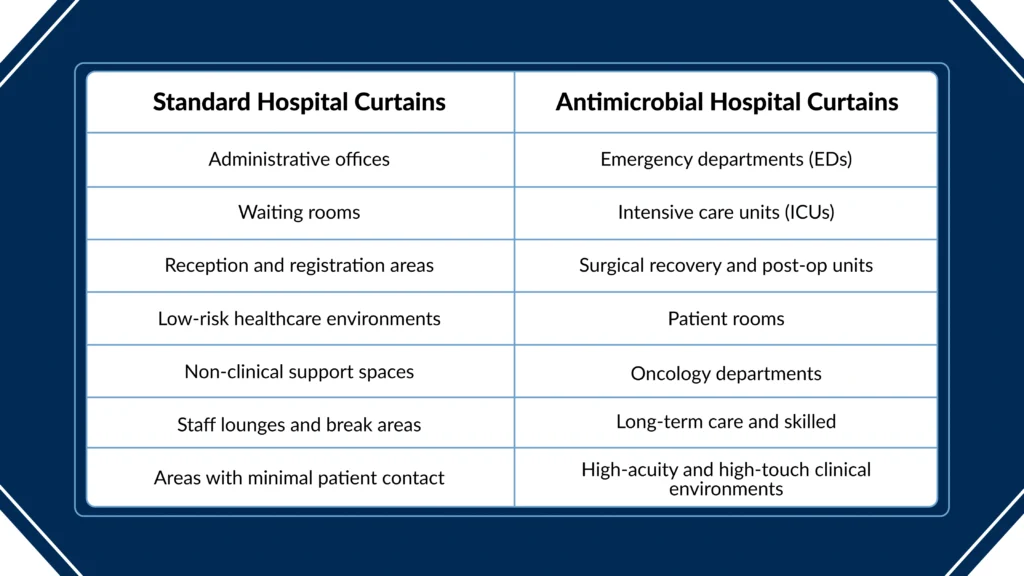
In higher-risk environments, antimicrobial fabrics provide an additional safeguard where infection prevention is a critical operational priority.
Fire Safety & Regulatory Compliance
In healthcare facilities, infection control isn’t the only requirement. Privacy curtains must also comply with fire safety regulations. Healthcare facilities should ensure that any curtain system selected meets applicable fire performance standards, including NFPA 701 requirements for flame resistance. Balancing infection control and fire protection is essential when specifying cubicle curtains for hospitals and other patient privacy systems.
Why Healthcare Facilities Choose GSS
Healthcare facilities have unique requirements for privacy curtains. Beyond providing patient privacy, curtain systems must support infection control efforts, withstand frequent use, and align with facility standards.
Granite State Specialties works with hospitals, medical offices, long-term care facilities, and healthcare systems to identify curtain solutions that fit the demands of each environment.
Whether the priority is antimicrobial protection, durability, ease of maintenance, or regulatory compliance, GSS helps facility teams make informed decisions that support both patient care and operational efficiency.
Protect Patients & Staff With GSS Healthcare Solutions
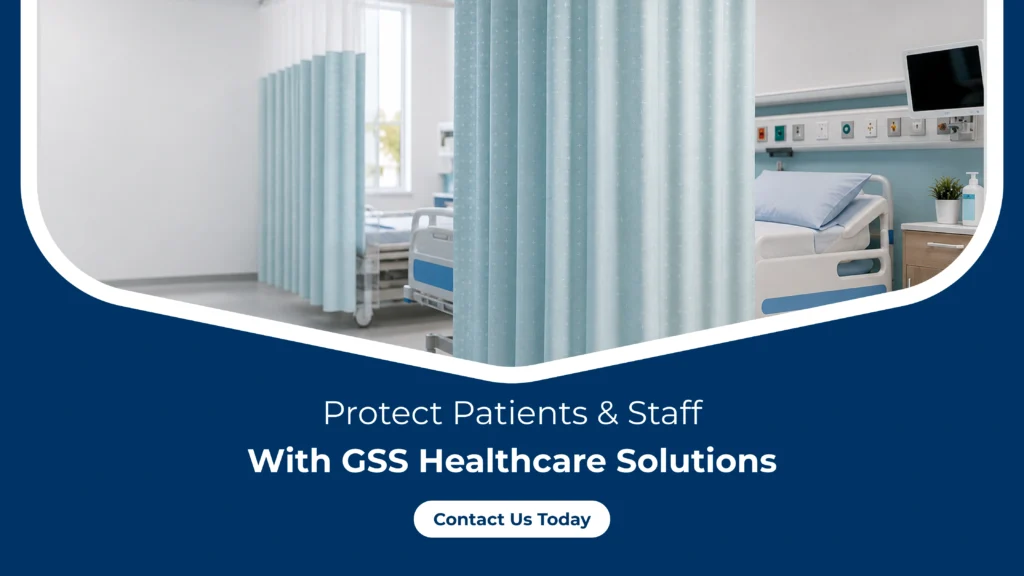
Creating a safer healthcare environment requires attention to every detail, including the surfaces patients, visitors, and staff interact with every day.
From antimicrobial hospital curtains to complete cubicle curtain systems, Granite State Specialties provides healthcare privacy solutions designed for modern clinical settings. Whether you’re planning a new installation, replacing aging curtains, or upgrading infection control measures, the GSS team can help you find the right fit for your facility.
Protect your patients and staff. Contact Granite State Specialties today to learn more about antimicrobial curtain solutions for your healthcare environment.
Frequently Asked Questions
1. How do antimicrobial curtains work?
Antimicrobial curtains use technologies such as silver ions or permanently bonded antimicrobial treatments to inhibit the growth and reproduction of bacteria and other microorganisms on the fabric surface.
2. What is the purpose of hospital curtains?
Hospital curtains provide patient privacy while helping divide clinical spaces. They also play a role in infection prevention strategies because they are frequently touched surfaces within healthcare environments.
3. What are the benefits of antimicrobials?
Antimicrobial treatments help reduce microbial growth, support infection control efforts, improve odor resistance, and provide an additional layer of protection between cleaning cycles.
4. What are antimicrobial fabrics for hospitals?
Antimicrobial hospital fabrics are specially engineered textiles designed to inhibit microbial growth while meeting healthcare requirements for durability, privacy, and fire safety compliance.
5. Do antimicrobial hospital curtains eliminate the need for laundering?
No. Antimicrobial curtains help reduce microbial growth between cleaning cycles, but they do not replace routine laundering, disinfection protocols, or other infection control measures.