
Open a locker supplier’s catalog for the first time, and the options multiply fast. Steel, HDPE, phenolic, laminate, wood, a dozen finishes, and a sales rep asking what you need by Friday.
For facility managers, architects, school administrators, and contractors specifying interior storage, the choice of locker materials is easy to underestimate and expensive to get wrong.
The material you choose determines how a locker room looks on day one and how it holds up after years of wet gear, slammed doors, and daily wear.
This blog breaks down the five primary locker materials used in commercial, educational, and industrial facilities, so you can match the right one to your space instead of guessing.
| What Are the Main Types of Locker Materials? Commercial lockers are typically built from one of five materials: Powder-Coated SteelSolid Plastic (HDPE)PhenolicPlastic LaminateWood Steel is the most economical and familiar option. HDPE and phenolic are the most moisture- and impact-resistant, making them the standard choice for wet or high-traffic environments. Laminate and wood are chosen more for appearance, in front-of-house or upscale spaces. |
5 Common Locker Materials for Commercial Facilities
The right locker material depends on where the system will be installed, how heavily it will be used, and what level of maintenance the facility can support. Here are five common options and where each performs best.
1. Powder-Coated Steel
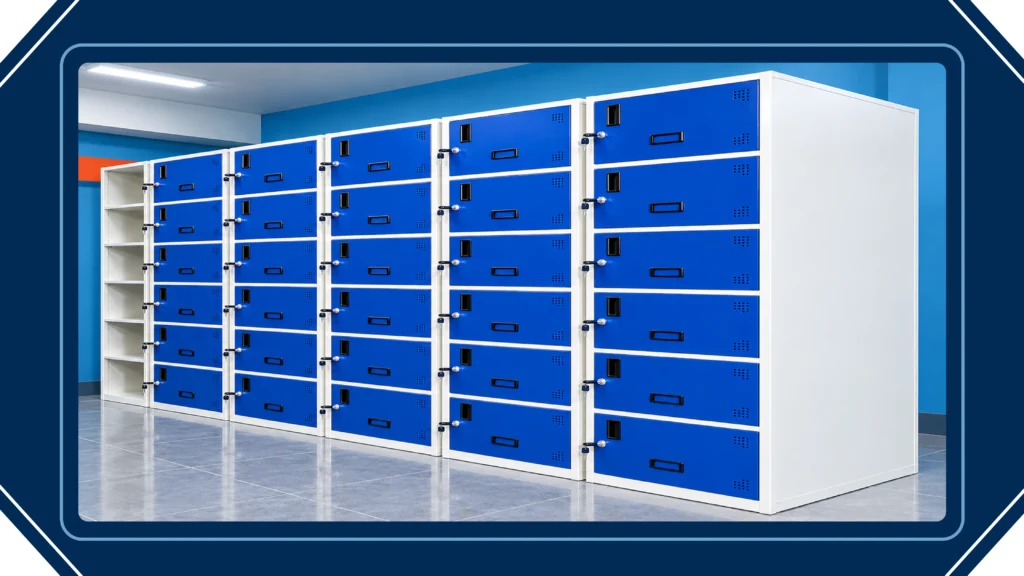
Steel is the industry standard for K-12 schools and employee breakrooms, and for good reason. It’s the most cost-effective of the five options covered here, structurally rigid, and available in dozens of colors with baked-on enamel finishes that resist scratching and everyday vandalism.
Steel is only as protected as its coating. Once a scratch or dent breaches the finish, exposed metal becomes vulnerable to rust, especially in humid rooms or anywhere moisture is a regular presence. That makes steel best suited to dry, low-abuse spaces such as office corridors and standard school hallways.
When it comes to steel vs. plastic lockers, the choice mostly comes down to the environment: steel wins on initial price in dry spaces, while plastic pulls ahead as soon as moisture enters the picture.
2. Solid Plastic (HDPE)
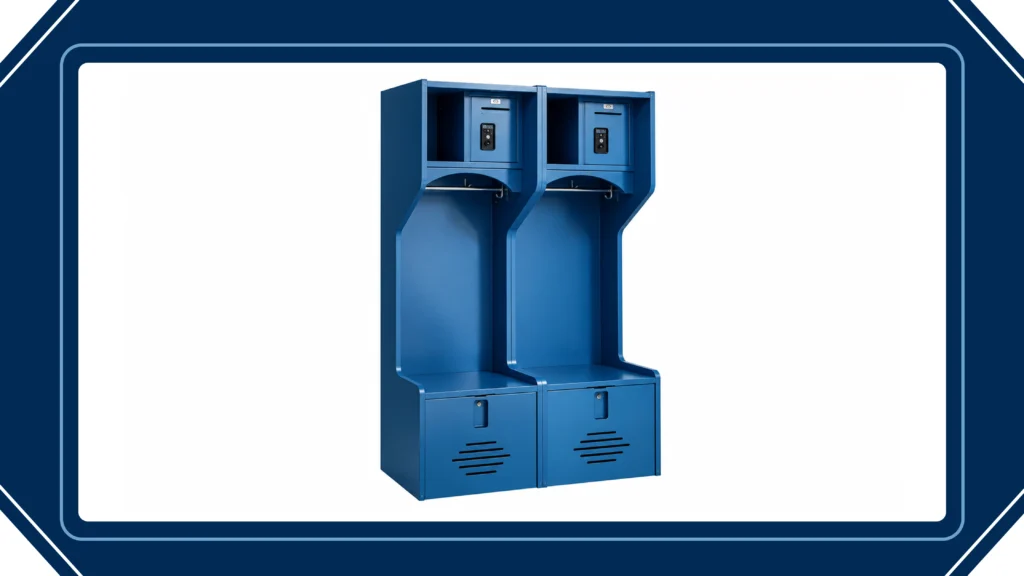
High-density polyethylene, or HDPE, is a solid plastic locker material that never rusts, delaminates, or develops mildew. Because the color runs entirely through the material rather than sitting on a surface coating, HDPE lockers resist dents and can be power-washed without damaging the finish.
This makes HDPE one of the top choices, alongside phenolic, for pool decks, aquatic centers, and any locker room with direct water exposure. It costs more upfront than steel, but near-zero maintenance usually makes up the difference over the locker’s lifespan.
3. Phenolic
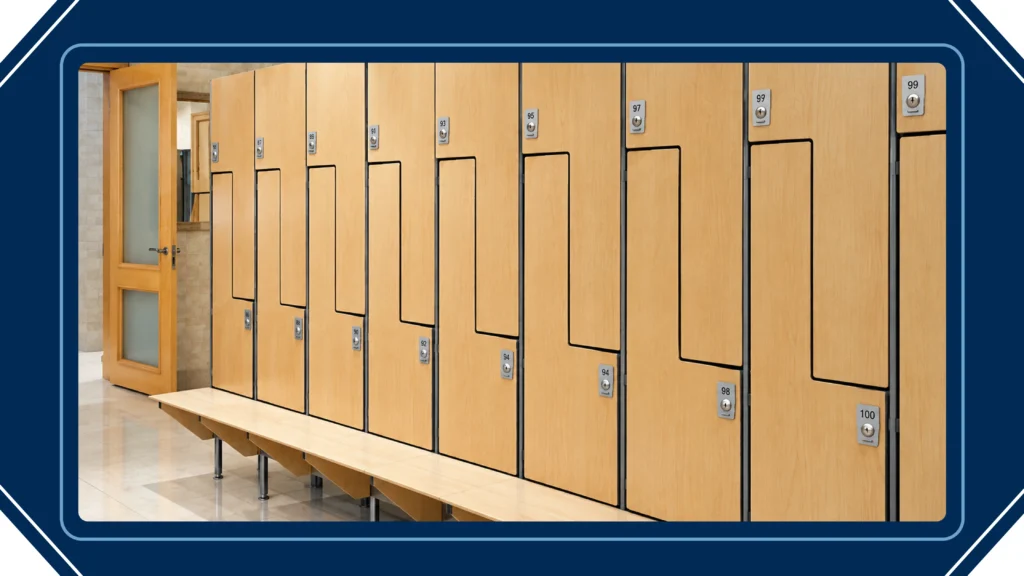
Phenolic lockers, also known as phenolic core lockers, are built from layers of kraft paper saturated with resin and compressed under high pressure into a dense, solid panel.
Like HDPE, phenolic is fully moisture-resistant and won’t rust; it also resists scratching, graffiti, and heavy impact, making it a common choice for high-volume athletic facilities and gyms, as well as wet areas.
Moreover, phenolic and HDPE are best suited to demanding, high-moisture environments. Phenolic typically costs more upfront, and facilities usually justify that cost through lower long-term maintenance and a longer service life.
4. Plastic Laminate
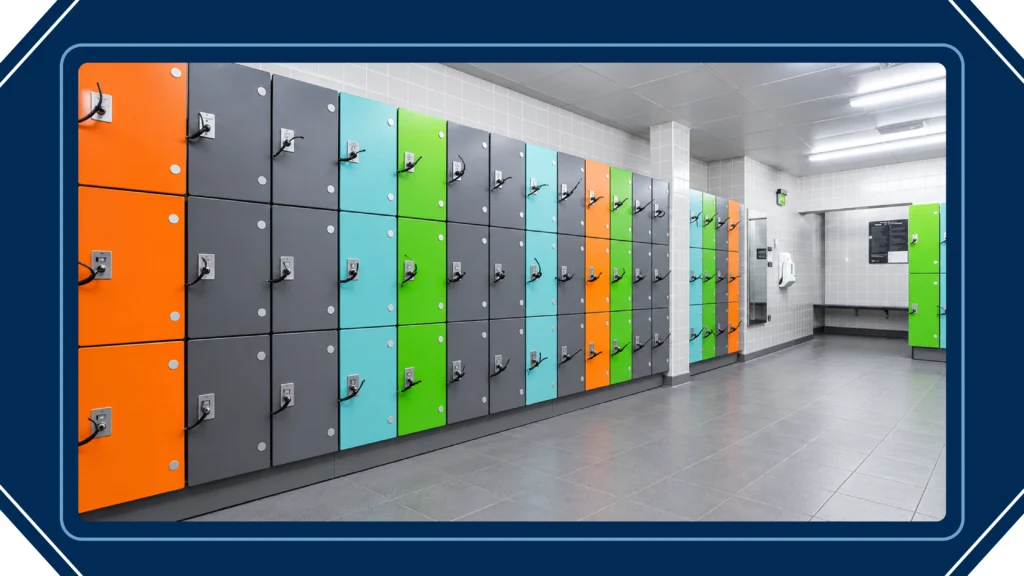
Plastic laminate lockers offer a similar range of finishes and design flexibility to phenolic and wood, generally at a lower installation cost.
However, laminate isn’t suitable for standing water or constant humidity like phenolic and HDPE, so it fits best in dry-to-moderate environments where appearance matters, such as reception-adjacent locker areas or staff spaces.
5. Wood
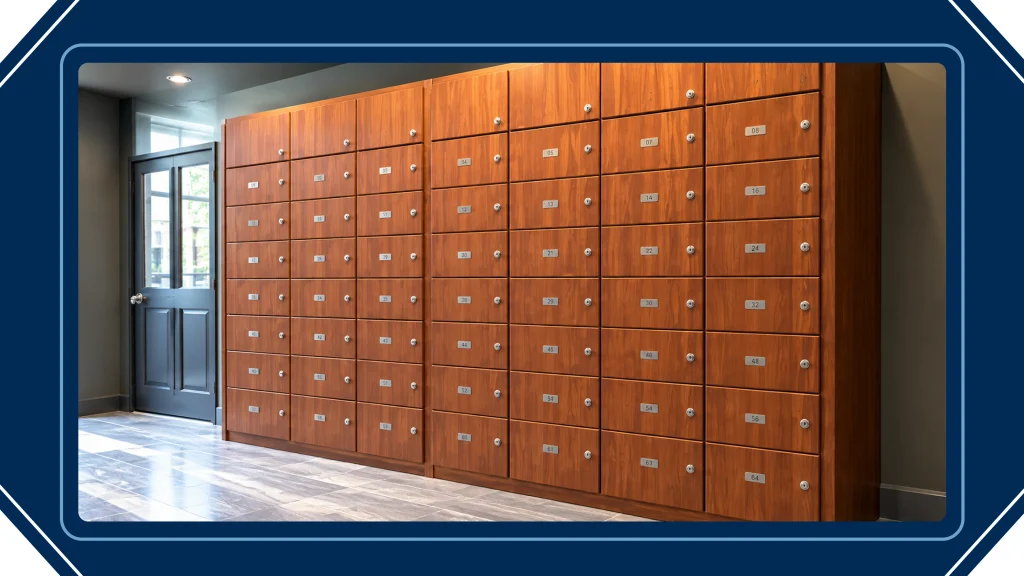
Wood and wood-veneer lockers deliver a warm, upscale architectural look that none of the other four options can fully replicate. They’re a natural fit for country clubs, spas, and executive locker rooms, where the goal is a premium feel and not industrial durability.
Wood is also the most maintenance-intensive of the five materials, and the least tolerant of sustained moisture. In wet or high-humidity spaces, wood typically isn’t the right choice, no matter how well it fits the aesthetic.
How Do These Materials Compare?
| Material | Moisture Resistance | Impact Resistance | Maintenance | Best Fit |
| Powder-Coated Steel | Low (rusts once coating is breached) | Moderate | Periodic repainting/repair | Dry corridors, breakrooms |
| Solid Plastic (HDPE) | Excellent | High | Minimal | Pools, aquatic centers, wet areas |
| Phenolic | Excellent | Very high | Minimal | Athletic facilities, wet + high-impact areas |
| Plastic Laminate | Moderate | Moderate | Low | Dry, design-forward spaces |
| Wood | Low | Low to moderate | High | Country clubs, spas, executive areas |
Matching Locker Materials to Your Commercial Facility Needs
The right locker material usually follows the environment first, then the look. Here’s how that plays out across the facility types GSS works with most.
K-12 Schools & Universities
- Powder-coated steel remains the standard for general-use corridors and locker rooms. It’s the most budget-friendly option across many units, and its rigid construction holds up to years of student traffic.
- Specify louvered or ventilated steel doors for better airflow in gym-adjacent hallways.
- For renovated wings, high-traffic athletic corridors, or areas prone to graffiti, phenolic or plastic laminate are worth the upgrade.
- Both resist scratching and vandalism far better than painted steel and hold up to repeated cleaning with harsher disinfectants, which schools have leaned on more heavily in recent years.
Aquatic Centers & Pool Decks
- HDPE and phenolic are the only two of the five materials built to sit in constant humidity and direct water exposure without rusting, swelling, or growing mold.
- Avoid steel, laminate, and wood entirely, even with protective coatings, since sustained moisture will eventually break down the finish.
- HDPE is often specified for straightforward pool-deck lockers.
- Phenolic is often chosen when the space also sees heavy foot traffic or needs a more refined look, such as at a spa or aquatic club rather than a public pool.
Fitness Centers & Athletic Clubs
- Locker rooms often deal with a mix of moisture (showers, sweat, wet swimsuits) and heavy daily impact (slammed doors, gym bags, dropped weights nearby).
- Phenolic is generally the strongest fit for the lockers themselves, since it handles both demands at once without the maintenance schedule steel would require in the same conditions.
- Wood or laminate finishes are commonly reserved for adjacent lounge areas, reception desks, or front-of-house cabinetry, where the goal shifts from durability to atmosphere.
- Keep these materials out of the wet locker room itself and limit them to drier, lower-traffic zones of the facility.
Country Clubs & Executive Spaces
- Wood and high-end laminate finishes are the standard specification for premium feel.
- These materials read as upscale in a way steel and HDPE simply can’t, which matters in member-facing spaces where the locker room is part of the overall experience.
- Best suited to an executive locker room with dedicated staff, rather than a heavily used public-facing shower area.
Healthcare Facilities
- HDPE is a strong fit here for the same reasons it works in aquatic settings: it won’t absorb moisture or harbor bacteria in surface scratches.
- Laminate is also common in staff locker rooms and break areas, where appearance matters somewhat more than in a purely clinical space.
- Steel is typically reserved for lower-visibility storage, such as staff break areas away from patient-facing zones, where budget outweighs the need for a premium finish.
Employee Breakrooms & Industrial Facilities
- These spaces don’t typically face the moisture or impact challenges that justify phenolic or HDPE’s higher price point, so steel’s lower cost and easy replacement make it the practical default.
- The one exception is industrial environments with washdown areas, chemical exposure, or nearby heavy equipment traffic.
- In those specific zones, it’s worth stepping up to HDPE or phenolic even in an otherwise steel-dominant facility.
| Pro Tip: The cheapest option upfront isn’t always the cheapest over time. In wet or high-traffic spaces, steel’s lower price can be offset by repainting, rust repair, and early replacement. Before deciding on locker materials for a demanding environment, it’s worth estimating total cost of ownership rather than comparing quotes alone. |
The GSS Locker Selection Advantage
Choosing the right material is only half the project. Granite State Specialties (GSS) supplies and installs metal, HDPE, phenolic, laminate, and wood-finish lockers from leading manufacturers, including PENCO, Scranton Products, Hollman, Hadrian, and ASI Storage.
Every GSS installer holds a minimum of 30 hours of OSHA training, and our team manages the full project, from space optimization and CAD layout design to final installation, so you have a single point of contact.
Explore our full line of lockers, benches, and shelving, or pair your locker project with commercial toilet partitions for a coordinated locker room build.
Plan Your Facility Locker Solution With GSS

Finding the right locker materials is only the first step. The final solution must also account for space, traffic flow, moisture exposure, storage needs, maintenance, and daily facility use.
GSS helps facility managers, architects, school administrators, and contractors evaluate these factors and select the right commercial storage options for the space. We supply and install steel, HDPE, phenolic, laminate, and wood lockers, with support for layout planning, product coordination, and professional installation.
Planning a new facility or upgrading an existing storage system? Contact Granite State Specialties for expert guidance on locker material selection and turnkey installation.
FAQs
1. What is the most durable locker material?
Phenolic is generally considered the most durable of the five, combining full moisture resistance with strong resistance to scratching, graffiti, and heavy impact.
2. Which locker material is best for wet or humid areas?
HDPE and phenolic are the two options built for pool decks, aquatic centers, and any space with regular water exposure. Both resist rust, mildew, and delamination.
3. Are phenolic lockers worth the extra cost?
In wet or high-impact environments, phenolic’s durability and low maintenance often offset its higher upfront price over the life of the installation. In dry, low-traffic spaces, the extra cost may not be necessary.
4. What’s the difference between laminate and phenolic lockers?
Both offer a wide range of finishes, but phenolic is a solid, high-pressure compressed panel built for heavy moisture and impact, while laminate is a surface finish over a core material, better suited to dry or moderate-use environments.
5. How long do steel lockers typically last?
In dry, low-abuse environments, powder-coated steel lockers can last many years with minimal upkeep. In humid or high-impact spaces, coating damage and rust can shorten that lifespan considerably.