
When a shift ends in rain or snow, the same scene plays out in station bays, ski lodges, and maintenance depots: soaked jackets, heavy boots, and wet gloves come off, and the question is always the same.
Where does all this wet gear go? A closed locker can trap the moisture. A radiator or hallway hook is makeshift at best. And when the next call or the next storm arrives, the gear is still damp.
Heated lockers solve that problem at the source.
By pairing secure personal storage with controlled heat and airflow, these gear drying lockers dry clothing, footwear, and protective equipment between uses, while keeping everything in one assigned compartment.
This blog explains how heated lockers work, where they are most useful, and what facility managers should consider when specifying GSS commercial lockers for their site.
| What Are Heated Lockers? Heated lockers, also called gear drying lockers, are storage lockers with built-in heating and ventilation that dry damp clothing, boots, and protective equipment while keeping it secure. Warm air circulates through the locker between uses, so gear is dry and ready for the next shift instead of staying wet in a closed box. |
How Do Heated Lockers Work?
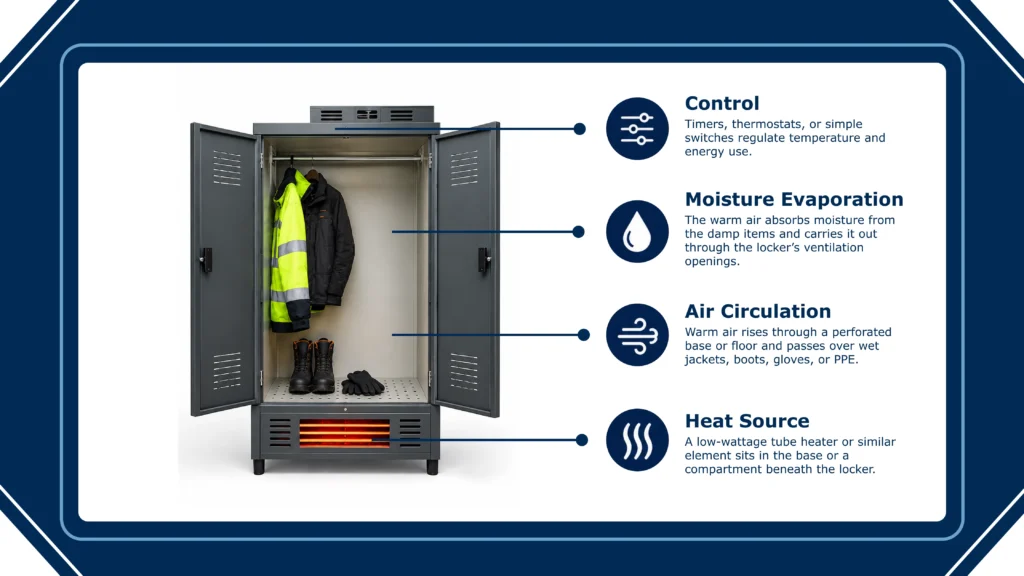
A heated locker uses a built-in heating element and controlled airflow to warm and dry stored items. The term covers two types: drying lockers for work gear, which this guide focuses on, and smart pickup lockers that keep food orders warm until a customer collects them.
Here is how a heated drying locker works, step by step:
- Heat Source: A low-wattage tube heater or similar element sits in the base or a compartment beneath the locker.
- Air Circulation: Warm air rises through a perforated base or floor and passes over wet jackets, boots, gloves, or PPE.
- Moisture Evaporation: The warm air absorbs moisture from the damp items and carries it out through the locker’s ventilation openings.
- Control: Timers, thermostats, or simple switches regulate temperature and energy use.
Drying speed depends on the garment material, how wet the gear is, how much is loaded, and the room temperature. Most units need an electrical connection, which a qualified electrician should install, and they are generally intended for indoor use.
Why Drying Gear is Important in High-Moisture Work Environments
Moisture is difficult to avoid in many operational environments. Firefighters may return from calls with wet turnout gear. Ski resort employees regularly deal with snow-covered clothing and equipment. Public works crews may work through rain, snow, or mud, while industrial teams may bring damp workwear back at the end of a shift.
Traditional storage does little to actively address this moisture. Wet clothing in an enclosed locker can stay damp for extended periods, especially when airflow is limited.
That can create several operational challenges:
- Equipment may take longer to become ready for use.
- Damp clothing can develop persistent odors.
- Moisture can make storage areas feel less comfortable.
- Repeated moisture exposure can contribute to equipment wear.
- Employees may need additional time or space to dry their gear.
A dedicated drying system gives facilities a more controlled approach to managing these everyday challenges.
Facilities that Rely on Heated Locker Systems
Heated storage is especially useful in workplaces where employees regularly return with wet, damp, or heavily used gear. In these environments, drying is part of keeping equipment organized, ready for the next shift, and easier to manage. Four applications stand out:
1. Fire Stations & Turnout Gear Storage
Turnout gear is bulky, expensive, and can take considerable time to dry after use. Dedicated gear drying lockers provide a designated space for storing and drying equipment between calls, helping crews manage wet gear without taking up additional floor space.
Any drying system should operate within the equipment manufacturer’s requirements and applicable NFPA guidance.
2. Ski Resorts
Ski patrol teams, lift operators, rental staff, and instructors spend long hours around snow and freezing conditions. Ski resort locker systems with integrated heating give employees a dedicated place to dry boots, gloves, jackets, and other gear between shifts. This can make the next shift easier to manage, particularly during periods of continuous snowfall or heavy resort activity.
3. Municipal Public Works
Plow drivers, road crews, and water and sewer workers often work through rain, sleet, snow, and other challenging conditions. Heated lockers at municipal depots provide each employee with a designated space to store and dry workwear between storms, shifts, and callouts, keeping wet gear from accumulating around shared work areas.
4. Industrial & Construction Sites
Outdoor construction and industrial crews regularly deal with wet workwear, hi-vis clothing, gloves, and boots. Industrial heated storage gives workers a dedicated place to dry and organize their gear rather than leaving wet equipment on benches, floors, or makeshift drying areas.
For facilities with multiple crews or frequent shift changes, this can also make equipment storage more orderly and easier to manage.
What Are the Benefits of Heated Lockers in These Facilities?
The main benefit is simple: gear dries while it is stored, so crews start every shift with dry equipment. Here is how that plays out in fire stations, ski resorts, public works depots, and industrial sites:
- Ready for the next shift: Gear dries while it is stored, which shortens the wait between shifts. For a fire department, turnout gear returns to service sooner, as long as drying stays within the temperature limits covered below. For a plow crew called out again after a storm, it means dry boots and gloves instead of a soggy start.
- Less mildew & odor: Damp gear sealed in a closed locker is a recipe for both. Warm, moving air keeps moisture from sitting in thick liners, boots, and gloves, which matters most in shared locker rooms where one wet jacket can affect the whole room.
- Protected equipment: Keeping costly PPE from sitting wet helps it last. Gear that stays damp can develop mold and mildew, even in hard-to-dry layers, so drying it properly protects the investment in turnout gear, ski patrol outerwear, and industrial rain gear.
- Comfort & hygiene: Workers put on warm, dry gear instead of cold, damp layers. That is a real gain for lift operators and construction crews who spend hours outdoors, and drier gear is also more pleasant and hygienic to wear.
- Organized storage: Each person has one secure place for their gear, instead of makeshift drying spots. Boots stay off the radiator, jackets stay off hallway hooks, and everything is locked away in one assigned locker.
| Are Heated Lockers Safe for Turnout Gear? Firefighter turnout gear requires a more controlled drying approach than ordinary workwear. Under NFPA 1851, the established care standard, drying temperatures were limited to 105°F (40°C), with gear recommended to dry in a well-ventilated area away from direct sunlight. The gear also needed to be completely dry before returning to service. MSA Fire summary of NFPA 1851 drying requirements NFPA 1851 has since been consolidated into NFPA 1850, which became effective in September 2025. MSA Fire overview of NFPA 1850: When specifying heated lockers for a fire station, look for systems that provide controlled, low-temperature drying and always follow the equipment manufacturer’s care instructions and the current applicable NFPA requirements. |
What to Consider When Specifying Heated Lockers
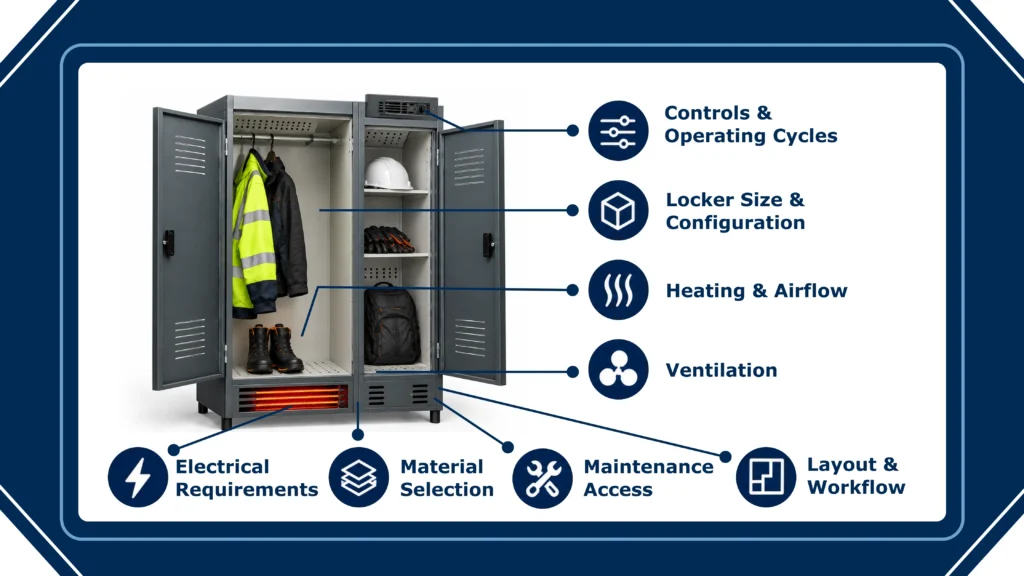
Selecting a system requires more than choosing a locker with a heating component. Facility managers should evaluate how the system will function within the building and the specific equipment being stored.
- Locker Size & Configuration: Consider the dimensions of the clothing, footwear, PPE, and other equipment users will store. Larger gear may require taller or wider compartments, while shelving and hooks can help maximize usable space.
- Heating & Airflow: Review how the system distributes heat and air through each compartment. The configuration should match the type and volume of equipment being dried.
- Ventilation: Proper ventilation is an important part of moisture management. Depending on the system, you may need to coordinate ventilation with the surrounding space or building systems.
- Controls & Operating Cycles: Consider how users will operate the system and whether temperature, timing, or drying cycles can be controlled efficiently.
- Electrical Requirements: Heated systems require electrical infrastructure. Confirm power requirements early so you can coordinate locker installation with the facility’s electrical design.
- Material Selection: The locker material should also match the environment. Facilities exposed to significant moisture may need materials and finishes selected specifically for those conditions.
- Maintenance Access: Ask how heating and airflow components can be inspected and maintained. Accessible components can make routine servicing easier over the life of the installation.
- Layout & Workflow: The best locker system should fit naturally into the facility. Consider circulation, changing areas, benches, entrances, exits, equipment movement, and the sequence users follow when storing and retrieving gear.
The GSS Heated Locker Advantage
Choosing heated lockers is only half the project. Granite State Specialties (GSS) supplies and installs GSS commercial lockers, including heated lockers, for fire and police stations, schools, fitness centers, aquatic facilities, and industrial sites. Our team handles space planning, CAD layout design, and final installation.
Every GSS installer has at least 30 hours of OSHA training, and we manage the project from procurement to installation, so you have one point of accountability. Explore our lockers, benches, and shelving, or pair them with toilet partitions for a coordinated locker room.
Get Reliable Heated Storage Built Around Your Crew & Facility With GSS

Heated lockers pay off wherever gear comes back wet and must be dry for the next shift or use, including fire stations, ski resorts, public works depots, and job sites. The right setup depends on your crew, your gear, and your facility, especially the temperature limits for turnout gear.
GSS plans the layout, matches the unit to the gear, and handles the installation with OSHA-trained installers, so wet gear stops being a daily problem.
Ready to keep your crews’ gear and facility dry & ready? Contact Granite State Specialties for expert guidance on heated lockers and turnkey installation.