
Walk into enough locker rooms, and you start to see the same story repeat itself. Doors that no longer close flush against the frame. Hinges bleeding rust down painted steel. Lockers were replaced years before anyone budgeted for them, often because the humidity near a pool deck destroyed units expected to last decades.
None of that happens because the facility did anything wrong operationally. It happens because the wrong locker material was used in the wrong environment. Commercial locker types exist because no single material performs well everywhere.
A locker that performs well in a dry office breakroom can fail within a few years next to a shower room, while a locker built for a humid aquatic center is often unnecessary in a quiet corporate hallway.
Facility conditions shape how people judge a building, too. Around 84% of Americans have a more negative impression of a facility with a dirty restroom, highlighting how the condition of high-use spaces influences visitor perception.
This blog covers the main commercial locker types, where each one fits best, the questions to ask before you buy, and the mistakes that often lead to higher ownership costs. Material selection comes before layout, so we’ll start there to help you make the right choice the first time.
How to Match Commercial Locker Types to Your Facility
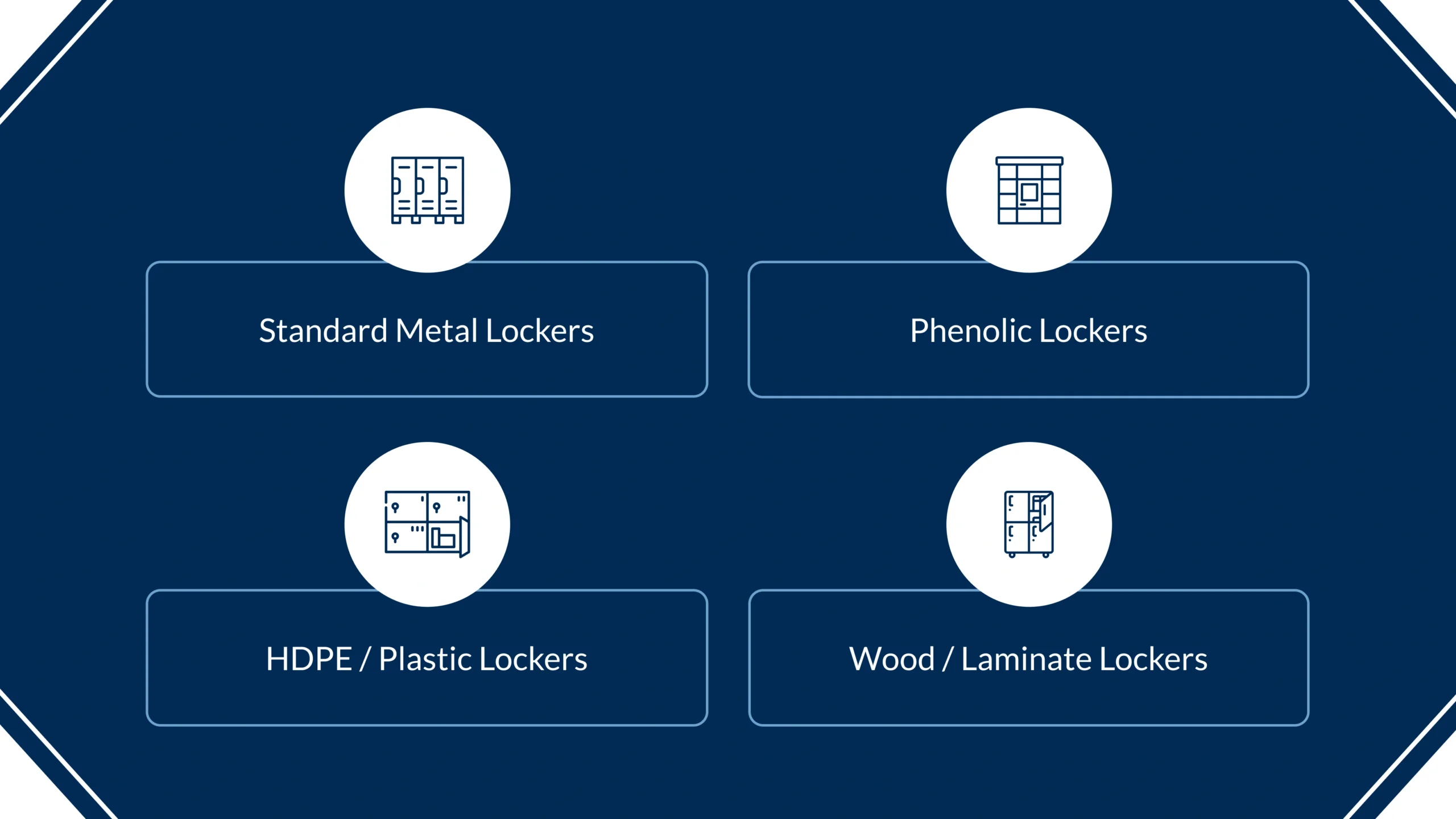
Locker materials aren’t interchangeable, and each is built for a specific purpose. Moisture exposure, traffic volume, security needs, and budget determine which commercial locker type is the right fit.
Standard Metal Lockers
Metal lockers, typically made from powder-coated steel, remain a popular choice for dry, moderate-traffic environments. Available in single-, double-, and multi-tier configurations, they’re also one of the most budget-friendly options.
They perform well in schools, offices, corporate break areas, and employee storage where humidity isn’t a concern. Their main limitation is moisture. Steel corrodes when regularly exposed to water, cleaning chemicals, or coastal humidity, and once rust develops, it’s difficult to restore painted surfaces.
For dry indoor spaces, metal lockers offer excellent value and remain one of the most widely used commercial locker types. In wet or high-humidity environments, however, phenolic or HDPE lockers are a better fit.
Phenolic Lockers
Phenolic lockers are built from dense, resin-impregnated panels that don’t absorb moisture the way steel or wood can. That single property changes everything about where they belong.
Phenolic resists bacterial growth, holds up to constant humidity, and shrugs off the kind of high-impact daily abuse that dents metal doors. Because the material doesn’t rust, chip, or delaminate under moisture, facilities get a longer service life without repainting, patching, or replacing individual doors.
This makes phenolic lockers the standard for pools, aquatic centers, fitness clubs, and any locker room where showers and humidity are part of daily use. The upfront cost is higher than that of steel, but in wet environments, the lifecycle savings from avoiding early replacement usually justify it.
HDPE / Plastic Lockers
Solid HDPE (high-density polyethylene) plastic lockers are built for demanding environments. Unlike steel, HDPE won’t corrode and offers excellent impact and chemical resistance.
They’re commonly used in industrial storage solutions, manufacturing facilities, warehouses, food processing plants, and other wet or chemically exposed environments. HDPE lockers resist rust and mold and hold up well to pressure washing.
Although HDPE costs more upfront than metal, it reduces the maintenance and replacement costs associated with corrosion, making it a practical choice for wash-down areas and production floors.
Wood / Laminate Lockers
Wood and laminate lockers are chosen for their appearance. They’re commonly installed in country clubs, corporate wellness centers, executive locker rooms, and other premium spaces where aesthetics are as important as storage.
They don’t offer the moisture or impact resistance of phenolic or HDPE, making them unsuitable for pool decks or industrial settings. Their finishes also require periodic maintenance to maintain their appearance.
Where presentation is a priority, wood and laminate lockers offer a finish that metal and plastic can’t replicate.
| Metal vs Plastic Lockers The metal vs plastic lockers comparison largely comes down to the environment: FactorMetal LockersHDPE / Plastic & Phenolic LockersUpfront CostLower initial costHigher initial investmentDurabilityBest for dry, moderate-use environmentsResistant to moisture, chemicals, and heavy impactsMaintenanceMay require rust treatment or repainting over timeRoutine cleaning with minimal maintenanceBest ApplicationsSchools, offices, employee storage, and other dry facilitiesPools, gyms, industrial sites, manufacturing facilities, and other high-moisture environments |
Factors to Consider Before Buying Commercial Lockers
A few practical questions upfront help narrow the list of commercial locker types and reduce the chances of choosing a solution that doesn’t fit your facility’s needs:
Environment
Start with the conditions the lockers will face every day. Dry offices, employee break rooms, and administrative buildings have very different requirements than pool decks, fitness centers, manufacturing plants, or food processing facilities. Moisture, humidity, and chemical exposure should guide material selection long before appearance or price enters the conversation.
Ventilation
Poor airflow traps moisture inside locker compartments, creating conditions that affect both the locker and the items stored inside. If users regularly store damp uniforms, towels, or athletic gear, look for locker designs that promote ventilation through perforated doors, louvered panels, or built-in airflow features.
Security Requirements
The right locking system depends on how the lockers will be used. Employee lockers assigned to the same user every day have different security needs than day-use lockers in recreation centers or gyms.
Common options include:
- Padlock hasps for flexible, low-cost security.
- Built-in combination locks for facilities that want to eliminate lost keys.
- Digital or keyless locks for shared-use spaces where users change frequently, and administrative control is important.
Choosing the right lock early helps reduce ongoing maintenance and simplifies day-to-day management.
ADA Accessibility
If your facility serves the public or is subject to ADA requirements, accessibility should be part of the planning process from the beginning. The Americans with Disabilities Act (ADA) Standards for Accessible Design include requirements for storage elements such as lockers, covering reach ranges, clear floor space, and operable parts.
Reviewing these requirements before finalizing the layout helps avoid costly modifications after installation.
Commercial Locker Selection Mistakes That Lead to Early Replacement

Most locker problems trace back to one of a handful of avoidable decisions made during the purchasing process.
- Wrong Material Selection: Even locker rooms just one wall away from a pool deck can accumulate enough ambient humidity to corrode steel within a few years. Phenolic or HDPE should be the default in these spaces.
- Price Over Performance: The lowest quote often reflects a material mismatch rather than a better value. A cheaper locker that needs replacing in five years costs more than a durable one that lasts twenty.
- Poor Ventilation Design: Even moisture-resistant materials perform better with adequate airflow. Poor ventilation shortens the lifespan of hardware, locks, and finishes across all locker types.
- Wrong Lock Selection: A high-security keypad in a low-risk breakroom adds unnecessary cost. A basic key lock in a high-turnover gym invites lost-key headaches. Match the lock to actual usage patterns.
- ADA Compliance Oversights: Public facilities are expected to provide accessible units at appropriate reach ranges under ADA accessibility standards. Retrofitting after installation is far more disruptive than planning for it up front.
- Poor Installation Planning: Ordering lockers without a layout plan often leads to spacing problems, blocked traffic flow, or units that don’t fit the room as intended.
Why is a Well-Planned Locker Installation Important?
The locker itself is only part of the equation. Proper installation determines how well it performs over the next fifteen or twenty years.
- Layout Planning: Plan spacing between locker banks, ADA clearances, and traffic flow before installation. An efficient layout helps prevent bottlenecks once the space is in daily use.
- Proper Installation: Lockers should be properly anchored and leveled, especially in multi-tier configurations where uneven mounting places extra stress on doors and hinges. Poor installation shortens service life regardless of the material.
- Maintenance Access: Leave enough clearance for future repairs, part replacement, or reconfiguration. It’s much easier to plan for service access than to create it later.
How GSS Helps Facilities Choose the Right Commercial Lockers
Granite State Specialties works with facility teams from the planning stage through final installation. That starts with understanding the environment, humidity, traffic patterns, and how the space will actually be used, before recommending a material.
GSS supplies and installs commercial lockers across major material types, including:
- Metal lockers: A practical choice for dry environments such as schools, offices, and employee storage areas.
- Phenolic lockers: Built for high-moisture spaces like pools, aquatic centers, and fitness facilities.
- HDPE plastic lockers: Built for demanding environments with heavy use, chemicals, or frequent washdowns.
- Wood and laminate lockers: Ideal for premium spaces where appearance and design are important.
The team handles layout recommendations, coordinates delivery and site readiness, and manages installation with OSHA-trained crews across New England and nationwide.
GSS also supports facilities with package-management solutions when projects extend beyond locker-room storage. For teams evaluating both storage needs, our smart parcel locker guide covers how automated parcel lockers fit into modern facilities.
Commercial lockers and parcel lockers serve different needs, and GSS helps facilities choose the right storage solution for each space.
Choose Commercial Locker Systems Built for Durability with GSS
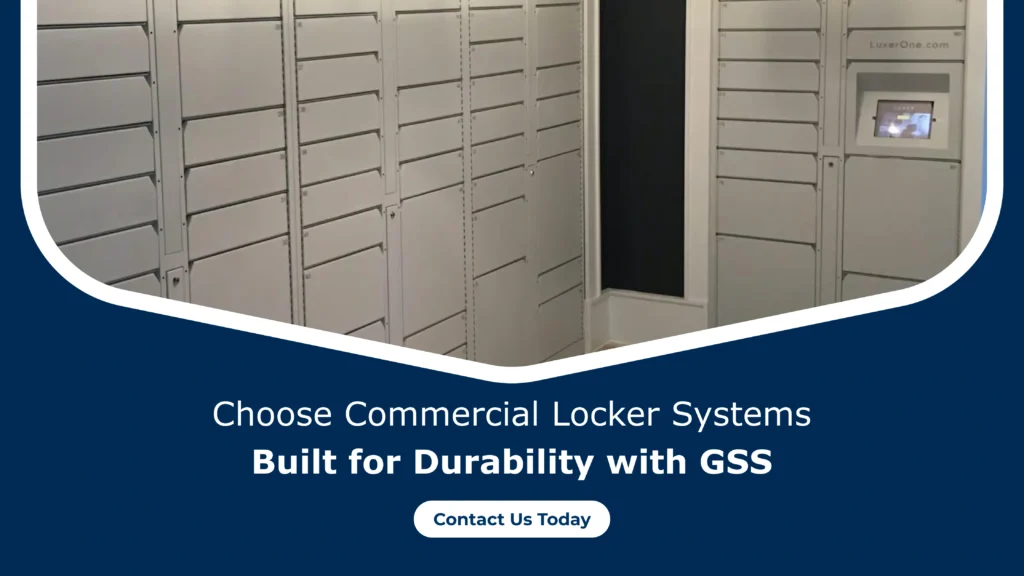
The right commercial locker should match your environment, support daily use, and deliver years of reliable performance without unnecessary maintenance or replacement costs. Choosing the right material, layout, and hardware from the start helps protect that investment.
GSS works with facility managers, architects, contractors, and project teams to recommend commercial locker systems that fit each facility’s requirements. From product selection and layout planning to professional installation, GSS provides support throughout the project.
Whether you’re planning a new facility, renovating an existing locker room, or replacing aging storage systems, GSS can help you choose a solution that fits your space and operational needs.
Don’t guess on your storage needs. Contact GSS today for a site-specific layout and locker recommendation.
Frequently Asked Questions
1. What are the main commercial locker types available for facilities?
The primary commercial locker types are standard metal, phenolic, HDPE (solid plastic), and wood or laminate. Each is built for a different combination of moisture exposure, traffic, and budget, so the right choice depends on the specific environment.
2. What are phenolic lockers, and why do pools and gyms use them?
Phenolic lockers are made from dense resin panels that resist moisture, bacterial growth, and heavy daily impact. Because they don’t corrode or absorb water, they’re a common choice for locker room design in pools, aquatic centers, and fitness facilities.
3. Are metal lockers a bad choice for locker rooms?
Not universally. Metal lockers work well in dry environments like offices, schools, and general storage areas. They become a poor choice, especially in humid or wet spaces, where sustained moisture can cause rust and premature failure.
4. How do I know which locker material fits my facility?
Start with the environment: humidity levels, chemical exposure, cleaning frequency, and user traffic. A facility specialist can recommend the right material and installation approach for the facility locker based on how the space will be used.
5 . Do commercial lockers need to meet ADA accessibility requirements?
Yes, public facilities are generally expected to include accessible locker units that meet ADA reach-range and clearance standards. Planning for these units during the initial layout is far simpler than retrofitting them afterward.