
Commercial shading is a site improvement with a clear purpose. It manages solar exposure, protects surfaces and equipment from sun and weather damage, and turns unused outdoor square footage into space people and vehicles can occupy for more of the year.
For facility managers, school administrators, restaurant owners, and property developers, a shade structure is a line item that appears in maintenance budgets, liability reviews, and space-planning studies before anyone even discusses its appearance.
It also supports UV protection in outdoor environments, an important consideration highlighted by the Skin Cancer Foundation.
However, sometimes confusion arises because shading is grouped with awnings and patio umbrellas, which are purchased on impulse rather than specified for a purpose.
Commercial-grade structures, including shade sails, cantilevered canopies, and fixed architectural shading, are engineered to withstand wind loads, UV exposure, and years of continuous outdoor service.
That distinction determines whether a structure holds up through a winter or needs replacing after three seasons.
This blog explores 11 practical applications of commercial shading across various facilities, along with the challenges each solution addresses.
11 Practical Applications for Commercial Shading
The best commercial shading solution depends on the space and the problem you’re trying to solve. Here are 11 practical applications that demonstrate its value across different industries:
1. Outdoor Dining and Employee Break Areas
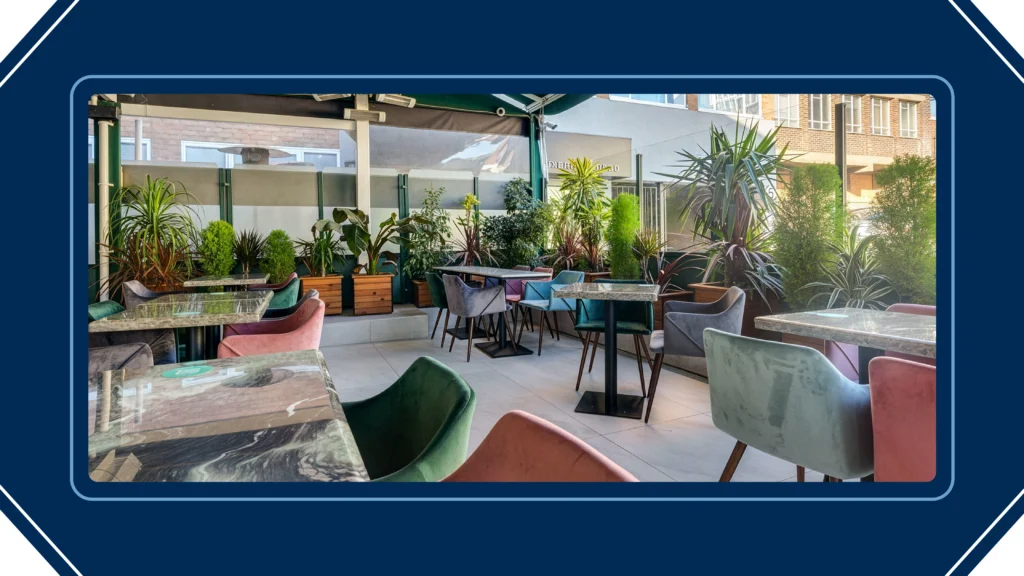
Restaurant owners and office campus managers add outdoor dining or break seating to increase usable space without expanding the building. The limiting factor is often the sun and heat, not demand.
A shaded patio stays functional for more hours and more months of the year, turning unused pavement into revenue-generating seating or employee break space.
For restaurants, this means more seating capacity during peak hours without the cost of a building addition.
For office campuses and distribution facilities, shaded break areas give employees a comfortable outdoor space to step away during breaks.
Cantilevered structures and shade sails work well here because they provide coverage without support posts blocking sightlines or service paths.
2. School Playgrounds
Playground shading is an important outdoor safety investment. Direct sun can make asphalt, rubber surfacing, and playground equipment reach unsafe temperatures during recess hours.
Shading over play structures lowers surface and surrounding temperatures, allowing students to use equipment safely for longer periods.
School districts require documentation on wind ratings, CPSC and ASTM fall-zone requirements, UV-blocking fabric ratings, and warranty terms before approving a project.
Properly specified shading helps districts reduce heat-related risks, limit potential injury claims, and protect playground equipment from prolonged sun exposure.
3. Parking Lots and Fleet Protection
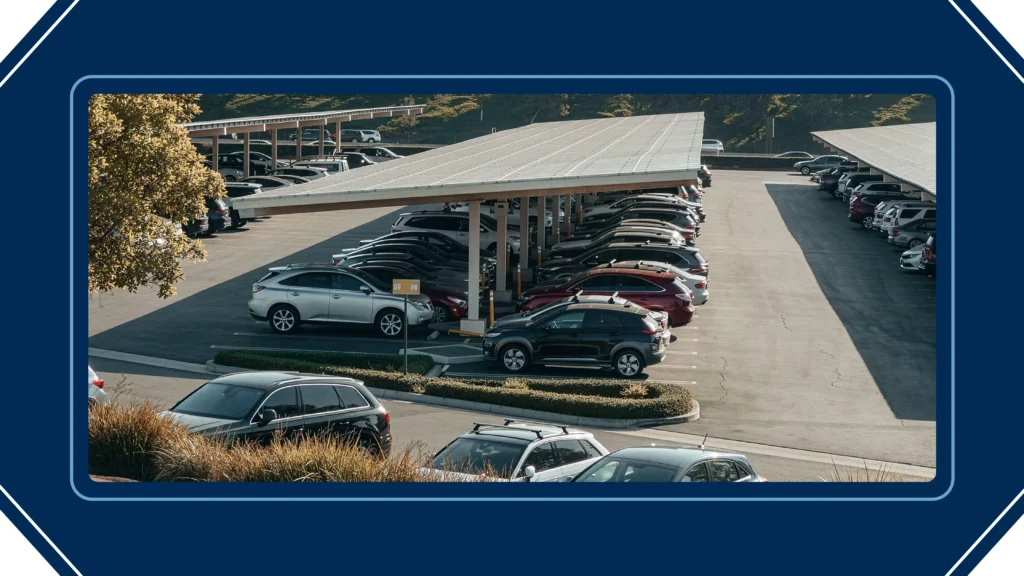
Vehicles parked in direct sun for a full workday show it: faded paint, cracked dashboards, and interior cabin temperatures that can climb past 140°F in summer months.
For municipal fleets, delivery and distribution operations, and multi-family developments with resident parking, that heat load shortens the service life of tires, seals, and interior components across dozens or hundreds of vehicles.
Shade over parking reduces cabin temperatures enough to extend HVAC compressor life and cut the paint and interior degradation that drives early trade-ins. For fleet operators, that’s a maintenance-budget line item with a measurable payback period, not an amenity.
Commercial site shade over parking also limits snow and ice accumulation on vehicle surfaces, a real consideration for facilities managing large lots through winters.
For many facility managers, parking shade is one of the most practical outdoor facility upgrades because it helps protect high-value vehicles while reducing long-term maintenance costs.
4. Athletic Facilities
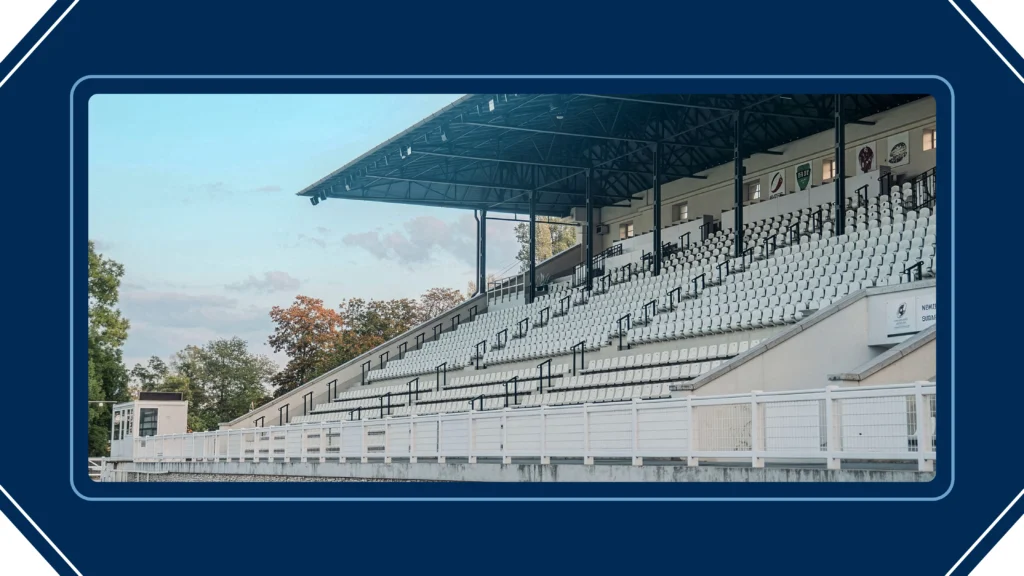
Bleachers and viewing areas at school and municipal athletic complexes experience hours of direct sun exposure during games held in peak heat.
Shade over seating areas improves spectator comfort, helping families stay longer, supporting concession revenue, and reducing heat-related interruptions or rescheduled events.
Commercial shading typically covers fixed seating areas rather than the field itself to preserve sightlines and lighting for play.
For recreation departments managing multiple facilities, these projects are often prioritized based on attendance, concession revenue, and the extent to which the space is used throughout the year.
5. Pools and Aquatic Facilities
Pool decks face two exposure factors: direct sun and UV reflection from the water. Shaded recovery areas give swimmers, especially children, a place to cool down without leaving the pool area.
Lifeguard stations also benefit from reduced glare and lower temperatures, helping maintain focus during long shifts and reducing safety risks.
Shaded family seating encourages longer visits by giving parents and caregivers a more comfortable place to stay.
For municipal and multifamily pool facilities, this can translate into stronger concession sales, season pass renewals, and repeat attendance.
6. Retail Storefronts
Storefront shading manages two things at once: interior glare and solar heat gain through glass, and the comfort of customers standing at entrances, outdoor displays, or queue lines.
Retail centers with west-facing storefronts deal with afternoon glare intense enough to affect merchandising displays and in-store lighting design.
Canopies and fixed shading at entry points reduce solar heat gain on glass storefronts, lowering cooling load during peak retail hours when HVAC systems are already working hardest.
For strip retail and shopping centers, shaded walkways between storefronts also extend the time customers linger outside store entrances rather than moving straight to conditioned space. This is the exact function architectural shading serves in commercial storefront design.
7. Loading Zones and Waste Handling Areas
Loading docks, waste-handling areas, and outdoor equipment staging zones are work environments, not amenities, and often receive less attention for shading than customer-facing spaces. Staff working full shifts in these areas remain exposed to direct sun without the option to move indoors.
Shading improves visibility for staff and drivers by reducing glare from pavement and equipment surfaces while protecting assets such as compactors, dumpsters, and staging materials from UV damage.
For distribution facilities and healthcare campuses, that means fewer heat-related incidents, reduced equipment wear, and fewer unexpected replacements from the maintenance budget.
8. Outdoor Waiting Areas
Clinics, municipal buildings, government offices, and transit stops share a common challenge: people waiting outside with no control over how long the wait lasts. Healthcare campuses, in particular, serve patients whose medical conditions make heat exposure a genuine concern.
Shaded entrances, drop-off zones, and waiting areas help facilities manage outdoor wait times without incurring the cost of building expansion.
They also provide sun protection for employees, visitors, and customers at public-facing facilities.
For government offices and municipal buildings handling high visitor volumes, shaded coverage reduces weather-related complaints, supports accessibility requirements, and helps avoid costly compliance retrofits later.
9. Breezeways and Pedestrian Walkways
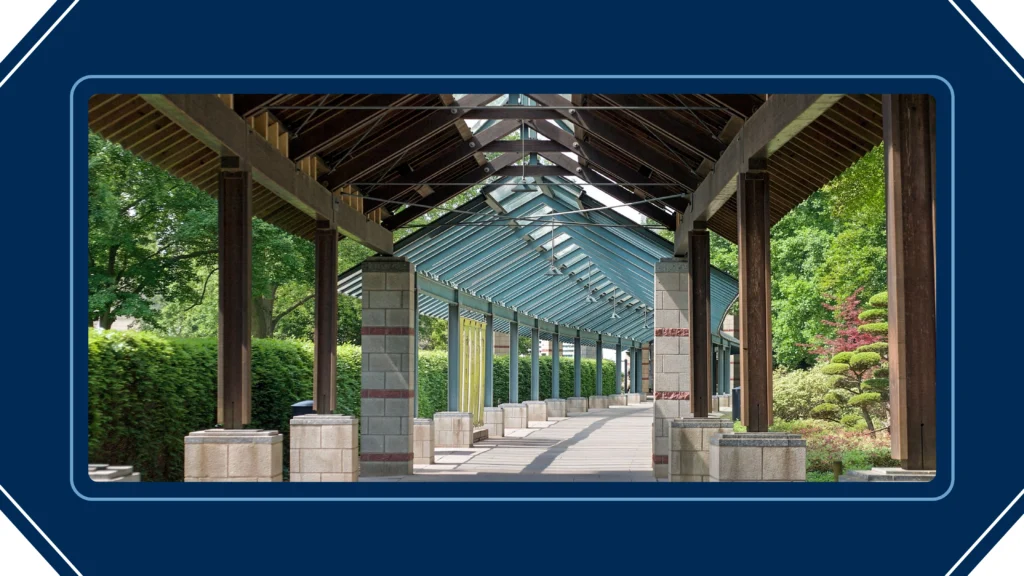
Campus environments, whether a school district with multiple buildings or a healthcare system with connected clinical spaces, rely on outdoor walkways to move people between structures.
Without shading, those connections become a weather liability: rain, snow, and direct sun all affect how willing staff, students, and visitors are to use an outdoor path instead of routing indoors.
Covered breezeways and shaded walkways keep pedestrian routes usable across more weather conditions, closing a design gap for campuses built without enclosed connectors between buildings.
For multi-family developments and office campuses, shaded walkways also reduce liability tied to wet or icy walking surfaces by keeping precipitation off high-traffic paths.
10. Amphitheaters and Event Venues
Outdoor amphitheaters and event lawns often see their heaviest use in the evening because daytime heat limits comfortable seating.
Shading over seating areas opens the venue to daytime programming, including summer camps, concerts, farmers’ markets, and community events.
For parks and recreation departments, that means making greater use of existing venues rather than investing in new facilities. It also improves audience comfort and encourages attendees to stay for the full program.
11. Outdoor Equipment and Asset Storage
Facilities with outdoor equipment yards, from municipal public works sites to distribution centers and multifamily properties, face an ongoing cost: UV and weather exposure that shortens equipment life and increases replacement needs.
Shading over equipment storage helps reduce UV damage to plastics, rubber seals, and painted surfaces while limiting moisture exposure that contributes to corrosion.
For facility managers, that means longer equipment life, lower replacement costs, and better returns on capital assets.
How GSS Helps Specify the Right Commercial Shading Solution?
GSS has over 30 years of experience supplying and installing construction specialty products for facility managers, school districts, municipal agencies, healthcare systems, and property developers on projects requiring precise specifications.
Commercial shading fits naturally within that expertise. GSS approaches outdoor shading as an engineered building component, using wind-rated structures, UV-resistant materials, and OSHA-trained installation crews familiar with commercial job-site requirements.
The same standards that apply to GSS commercial window treatments, including solar and blackout shades, also extend to outdoor shading solutions, backed by trusted manufacturer relationships and proven installation practices.
GSS outdoor solutions draw on the same manufacturer relationships and installation discipline behind the company’s full product line, from wall protection to signage to fire-rated doors.
Build Commercial Shading That Stands the Test of Time with GSS
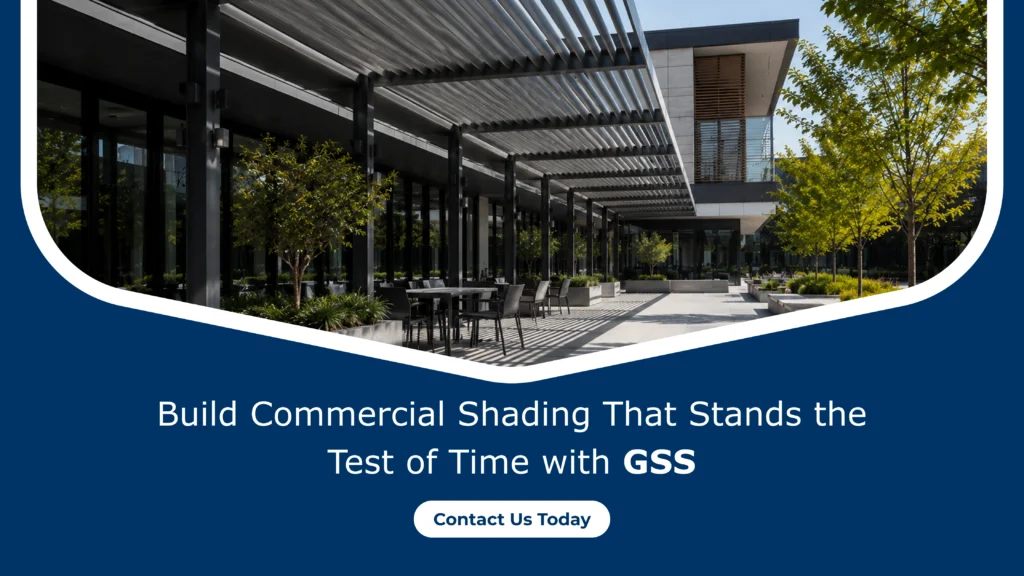
Commercial shading helps properties create more comfortable, functional outdoor spaces while protecting people, vehicles, and valuable assets from prolonged sun exposure. The right solution depends on how the space is used, the required level of coverage, and the demands of the environment.
A conversation with a GSS specialist can help you evaluate your site and determine the most suitable commercial shading solution for your project.
Maximize your property’s potential. Contact GSS today for a site evaluation on custom commercial shading solutions.
Frequently Asked Questions
1. What’s the difference between a shade sail and a fixed canopy for commercial applications?
Shade sails use tensioned fabric for flexible coverage in areas like playgrounds and courtyards, while fixed canopies use rigid frames for permanent coverage at entrances, storefronts, and loading areas. The right choice depends on site conditions and coverage needs.
2. How is commercial shading different from residential shade products?
Commercial shade structures are engineered to meet wind load requirements, applicable codes, and the demands of high-traffic public spaces. They provide outdoor sun protection for businesses, facilities, and public spaces through durable materials, proper anchoring systems, and installation methods built for long-term use.
3. Do commercial shade structures require permits?
Often, yes. Permit requirements vary by municipality, structure type, and whether the shade is attached to an existing building. GSS reviews local requirements during the planning process.
4. How long do commercial shade sails and canopies last?
Commercial-grade shade fabric commonly carries 10- to 15-year manufacturer warranties, while structural frames typically last longer with proper installation and maintenance. Lifespan depends on site conditions and exposure.
5. Can shade structures be added to an existing parking lot or playground?
In many cases, yes. Most systems can be installed with new footings while minimizing disruption to existing pavement, drainage, or playground layouts.
6. What wind ratings apply to commercial shade structures?
Wind load requirements vary by local building code and site conditions. GSS specifies structures based on regional wind and snow loads rather than relying on standard manufacturer ratings.
7. Does commercial shading affect ADA accessibility requirements?
Yes. Shade structures over accessible routes, entrances, and waiting areas must maintain required clearances. These requirements are considered during planning and layout.