
Spend time around a busy public pool, athletic field, or park, and the storage problem becomes obvious. Bags end up on bleachers, towels over fences, and jackets and equipment wherever someone can find a place to leave them.
People come to swim, play, exercise, or work, but their belongings still need a secure place.
Outdoor locker storage can solve that problem, but exterior installations come with their own challenges. Rain, humidity, UV exposure, temperature changes, and heavy daily use can all affect how a locker performs over time.
A dedicated system for a controlled indoor locker room may not suit an exposed pool deck or athletic field.
That makes more than the locker itself important. Material, hardware, construction, security, and installation must match the environment. Weather-resistant commercial lockers and heavy-duty exterior lockers can provide secure storage for personal belongings, clothing, equipment, and supplies while keeping them close to where they are needed.
This blog explains what makes a locker suitable for outdoor use, where these systems work best, which materials to consider, and how to select a solution that fits your facility.
Why Outdoor Lockers Require More Than Basic Storage
Indoor lockers generally operate in controlled environments. Outdoor installations must withstand conditions that can affect both the locker body and its hardware over time.
Rain and humidity can introduce moisture. Direct sunlight can expose materials and finishes to UV radiation. Seasonal temperature changes can also affect certain materials, while public-facing installations may experience heavier use, impact, and tampering. For that reason, look for weather-resistant commercial lockers based on site conditions.
Key considerations include:
- Moisture and humidity exposure
- Rain and snow
- Direct sunlight and UV exposure
- Temperature fluctuations
- Corrosion resistance
- Hardware durability
- Ventilation and drainage
- Security and access
- Cleaning and maintenance requirements
| What makes a locker suitable for outdoor use? A suitable outdoor locker uses materials, finishes, hardware, and construction designed to handle the environmental conditions of its installation area. |
5 Reasons to Opt for Outdoor Locker Storage at Your Facility
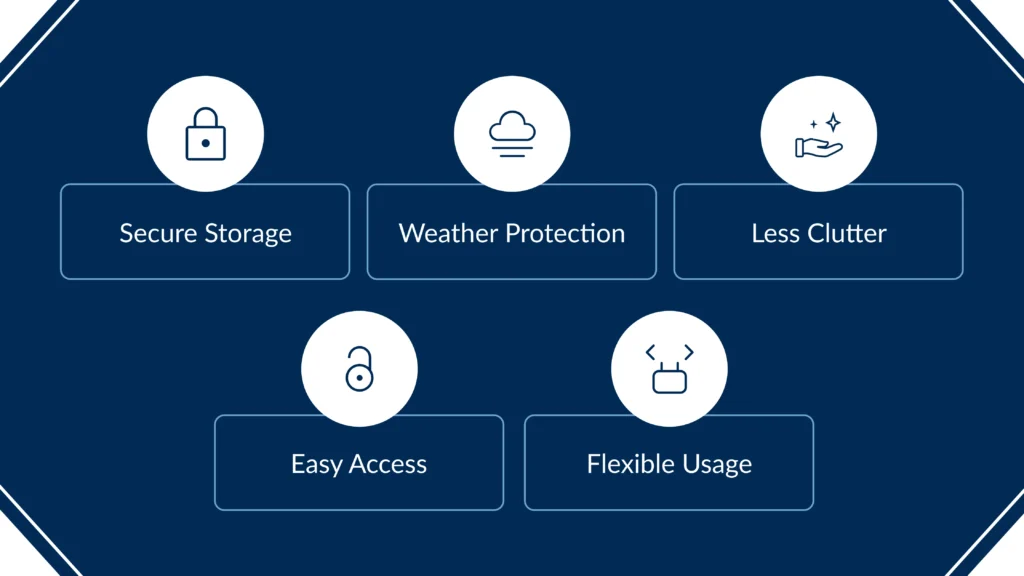
Outdoor lockers solve more than a basic storage problem. When placed where people actually need them, they can improve access, organization, security, and the overall use of facility space.
1. Secure Storage
Outdoor lockers give users a designated place to store personal belongings, clothing, equipment, and supplies near the activity or work area. This is particularly useful at athletic facilities, pools, parks, and outdoor work areas where bringing belongings inside may be inconvenient. Individual compartments also help keep personal items separated and easier to manage.
2. Weather Protection
Outdoor lockers provide a more controlled storage environment than leaving belongings on benches, bleachers, or other exposed surfaces. Purpose-built systems can help protect stored items from rain, humidity, sunlight, and other environmental exposure. The level of protection depends on the locker material, construction, hardware, installation, and site conditions.
3. Less Clutter
Outdoor storage gives facilities another place to manage bags, sports equipment, workwear, and other belongings without filling hallways, changing rooms, lobbies, or shared storage areas. Keeping frequently used items closer to where activities take place can also make the facility easier to navigate and manage.
4. Easy Access
Location matters when storage needs to be used throughout the day. Place lockers near athletic fields, pools, entrances, recreation areas, parking facilities, or outdoor work zones so users can access their belongings without making unnecessary trips indoors. For staff, convenient placement can also make equipment and supplies easier to retrieve during daily operations.
5. Flexible Usage
Outdoor lockers can add storage capacity without requiring additional indoor floor space. This is especially useful when locker rooms, storage rooms, or interior circulation areas are already limited. With the right layout and installation, exterior storage can make better use of available space while keeping frequently accessed belongings close to where they are needed.
Common Applications for Outdoor Locker Storage
Outdoor locker needs vary by facility, depending on what will be stored, how frequently the lockers will be used, and how much exposure they will have to weather and moisture. The material should follow those conditions, with options such as HDPE and powder-coated steel suited to different applications.
Schools & Athletic Facilities
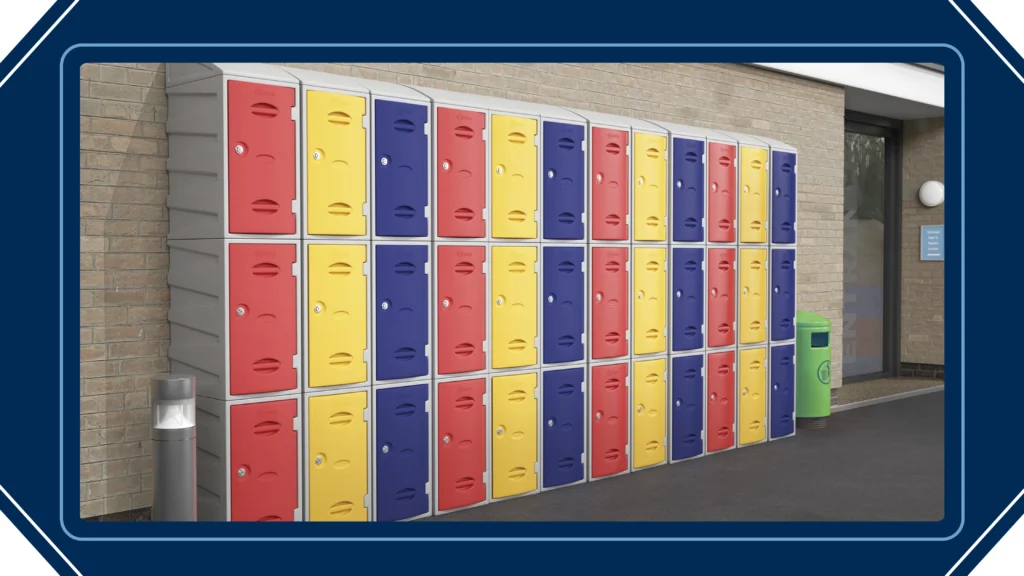
Schools may need lockers near athletic fields, pools, recreation areas, and other outdoor activity spaces for clothing, sports equipment, bags, footwear, and personal belongings. HDPE outdoor lockers can be a practical choice around pools and other moisture-prone areas, while powder-coated steel may suit covered or less exposed locations where appropriate protective finishes are specified.
Parks & Recreation Facilities
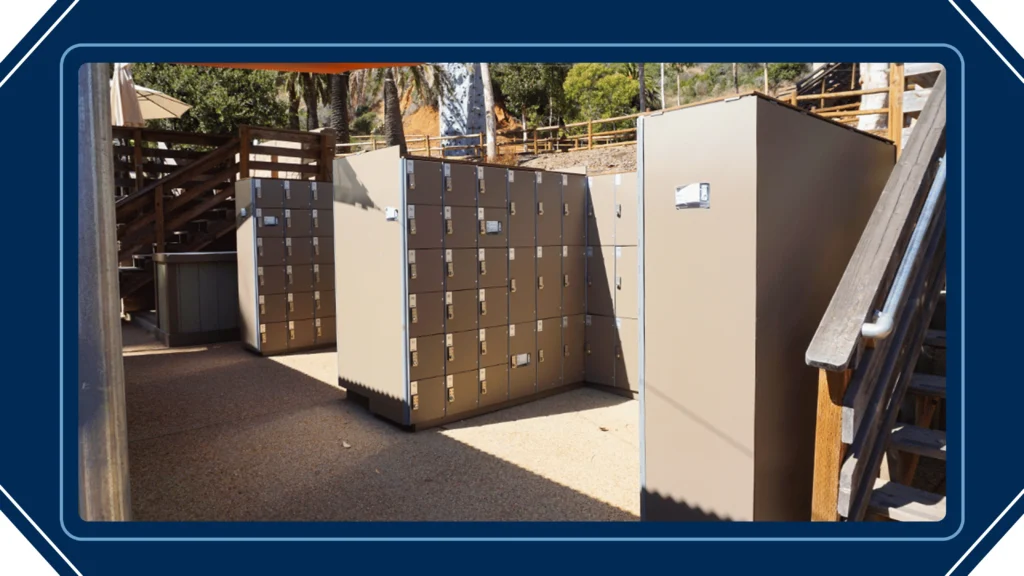
Parks, pools, recreation centers, and sports complexes often need convenient storage for visitor belongings, towels, clothing, recreational equipment, and staff supplies. HDPE lockers are particularly useful for wet environments because of their moisture and corrosion resistance. Around pools, facilities should also consider cleaning, drainage, ventilation, and exposure to pool chemicals.
Commercial Properties
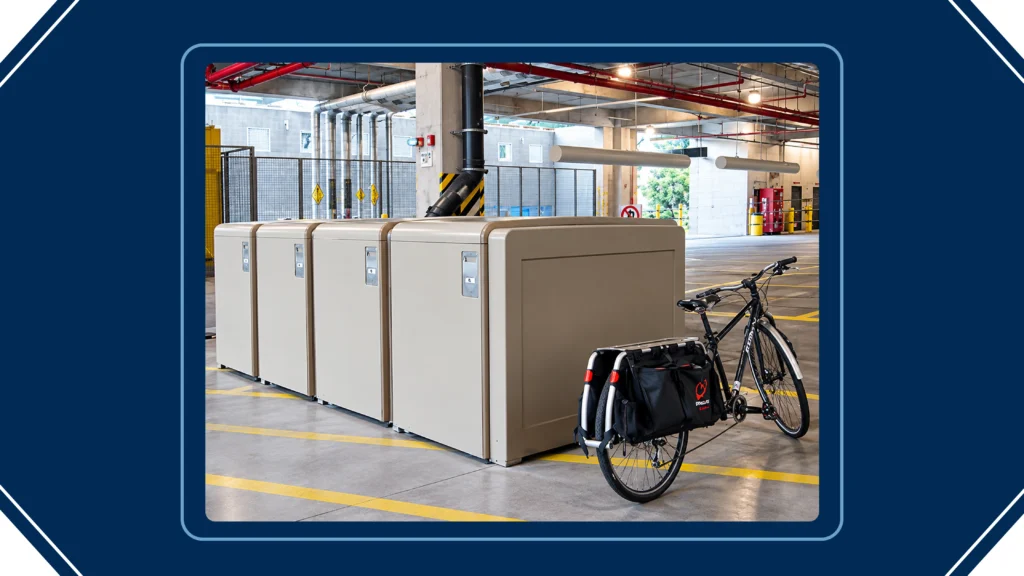
Commercial properties may use outdoor lockers for employee gear, commuter and bicycle storage, visitor belongings, or outdoor amenities. Powder-coated steel can work well in protected exterior or semi-outdoor areas when the coating, hardware, and installation suit the environment. Where moisture exposure is higher, HDPE or another moisture-resistant material may be more appropriate.
Municipal & Public Facilities
Public works departments, parks departments, and other municipal facilities may need storage for workwear, tools, PPE, and personal belongings. These high-use applications can benefit from heavy-duty exterior lockers designed around frequent access and outdoor exposure. Material selection should account for weather, moisture, expected impact, security, and maintenance requirements.
Wet & High-Moisture Environments
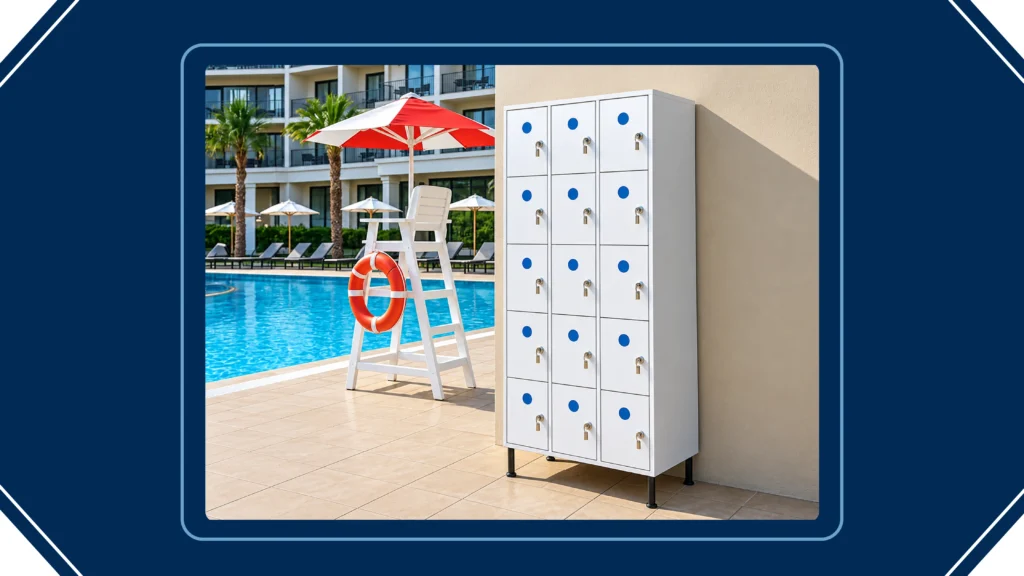
Some outdoor environments create a much greater moisture challenge than others. Swimming pools, water parks, beaches, athletic facilities, and recreation areas may regularly expose lockers to water, humidity, and wet belongings.
| Are outdoor lockers suitable for swimming pools? Yes. Outdoor lockers can be an effective storage option around swimming pools and other wet recreation facilities. HDPE is particularly well suited to many of these applications because it resists moisture and corrosion. |
Facilities should also consider drainage, ventilation, cleaning requirements, hardware, and exposure to pool chemicals when specifying lockers for these environments. The same principle applies elsewhere. A locker system for a dry school courtyard may have different requirements than one installed beside a public swimming pool.
| Match the Material to the Environment The material decision ultimately comes down to the conditions surrounding the installation: HDPE: A strong option for wet and moisture-prone environments, including pools and recreation facilities.Powder-coated steel: Suitable for some covered or semi-outdoor applications when appropriate coatings, hardware, and installation are used.Phenolic, laminate, or other materials: May suit specific applications based on exposure, storage needs, and product specifications. The goal is not simply to choose the most durable material. It is to select a locker system that can handle the facility’s specific weather exposure, usage, security, and maintenance demands. |
How to Choose the Right Outdoor Locker System
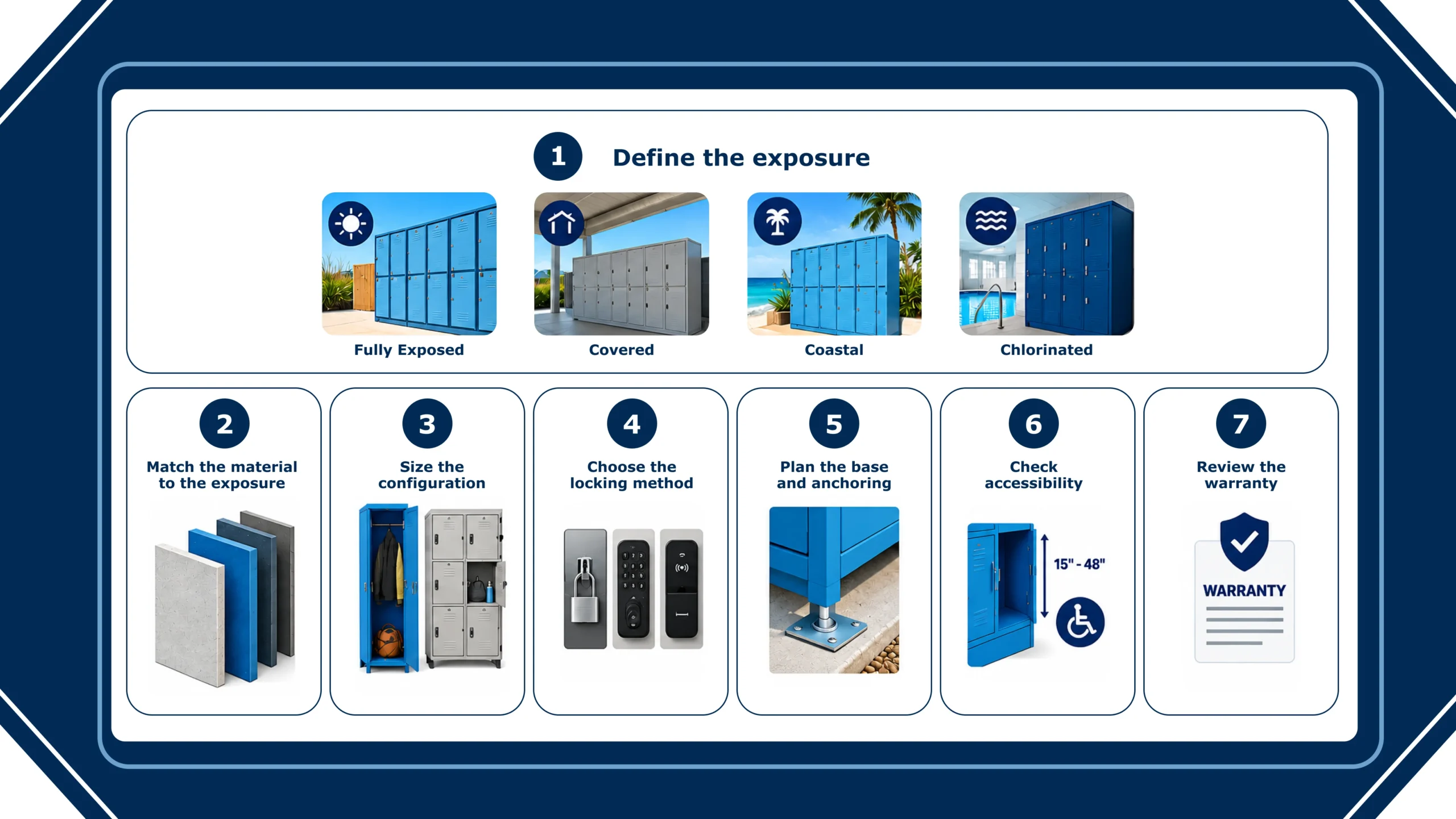
Choosing the right system starts with the site. Facility managers, architects, and contractors should evaluate how the lockers will be used and what conditions they will face.
- Define the exposure: Fully exposed, covered, coastal, and chlorinated environments each call for different materials.
- Match the material to the exposure: Use the table above as a starting point.
- Size the configuration: Single-tier units suit bags and gear, and multi-tier units maximize capacity per square foot.
- Choose the locking method: Consider padlock hasps for low-cost simplicity, or keypad and digital locks for facilities that don’t want to manage keys.
- Plan the base and anchoring: Outdoor lockers need a level, drained pad and anchoring per the manufacturer’s instructions.
- Check accessibility: Under the 2010 ADA Standards, where lockers are provided, at least 5% (and no fewer than one of each type) must be accessible, with compartments inside the 15-48 inch reach range.
- Review the warranty: A longer warranty on structural and material defects signals how long the manufacturer expects the product to last.
GSS Secure Storage Systems for Outdoor Applications
Outdoor locker storage works best when you plan the product and installation around the facility, not as a standalone purchase.
Granite State Specialties (GSS) helps facility managers, school administrators, architects, recreation directors, and commercial property teams evaluate storage requirements and select solutions suited to the space. We supply and install commercial locker systems with support for material selection, layout planning, product coordination, and professional installation.
For facilities considering GSS secure storage systems, the planning process can account for environmental exposure, user capacity, security, storage needs, and the overall site layout.
Get Your Outdoor Storage System With GSS
Outdoor locker storage needs to do more than hold belongings. The system must suit the site’s weather exposure, security requirements, user traffic, storage needs, and physical conditions.
GSS helps facility managers, school administrators, architects, recreation directors, and commercial property teams evaluate these factors and select locker systems suited to their environment. We supply and install commercial locker solutions with support for layout planning, product coordination, and installation.
Planning an outdoor storage area for a school, recreation facility, commercial property, or public space? Contact Granite State Specialties to discuss your requirements.
Frequently Asked Questions About Outdoor Locker Storage
1. What Is the Best Weatherproof Outdoor Storage Option?
For facilities that need secure individual storage, a purpose-built outdoor locker system made from materials suited to the site’s weather and moisture exposure is generally the most practical option. HDPE can be particularly useful in wet environments because it resists moisture and corrosion.
2. Which Outdoor Storage Box Is Best?
Outdoor storage boxes can work well for larger shared items, while lockers are generally better when users need individual, secure compartments. The right option depends on what you need to store, how often you’ll access it, and whether you need separate storage.
3. What Are Storage Units in the USA?
In the USA, storage units generally refer to individually rented spaces within self-storage facilities where people or businesses keep belongings for longer periods. Outdoor lockers serve a different purpose by providing smaller, accessible storage compartments at facilities where people work, study, exercise, or recreate.
4. What Are Some Cheap Options for Outdoor Storage?
Basic plastic storage boxes, sheds, open shelving, and standard lockers in protected areas can offer lower-cost outdoor storage. For commercial facilities, however, consider initial price alongside durability, security, maintenance, and expected service life.
5. Are HDPE Lockers Good for Outdoor Use?
Yes. HDPE lockers suit many outdoor applications because the material resists moisture and corrosion. They can be particularly useful around pools, parks, athletic facilities, and other areas where lockers may regularly encounter water or humidity.