
The sun doesn’t follow your building’s schedule, but your window shades can.
Throughout the day, shifting sunlight can create screen glare, overheated workspaces, uneven room temperatures, and inconsistent occupant comfort. In a commercial facility, manually adjusting shades across offices, conference rooms, classrooms, or patient areas is more than inconvenient. It’s inefficient.
That’s why more organizations are turning to commercial motorized shades and automated window treatments for offices. Instead of relying on staff or occupants to adjust shades by hand, these systems respond to schedules, daylight conditions, room needs, or the touch of a button.
For facility managers, designers, and building owners, this often leads to one key question: how do motorized blinds work?
The answer goes beyond a simple electric motor. Modern solar shading systems combine intelligent controls, reliable power sources, sensors, and building automation to improve comfort, support energy efficiency, and simplify day-to-day facility operations.
In this blog, we’ll explain how motorized blinds work, how they’re powered, how they integrate with commercial buildings, and why they’re becoming an essential investment in smarter, more efficient facilities.
How Do Motorized Blinds Work
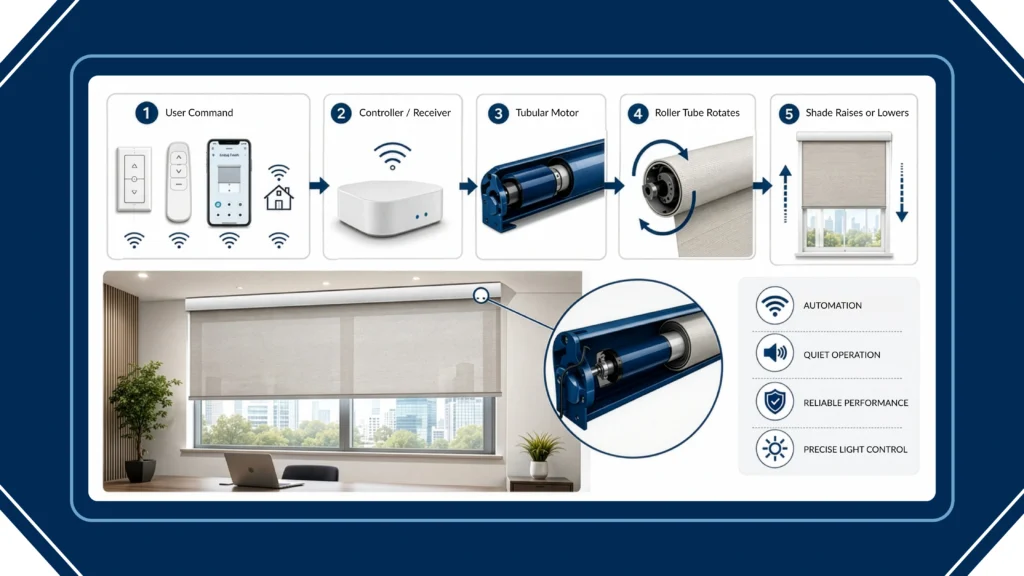
At their core, motorized blinds work by replacing the manual operating mechanism with a compact electric motor housed inside the roller tube.
When the motor receives a command, whether from a wall switch, a handheld remote, a smartphone, or an automation system, it rotates the roller tube to raise or lower the shade smoothly and consistently.
Unlike manual shades that rely on chains or pull cords, motorized systems move at a controlled speed and stop precisely at programmed positions. This not only improves convenience but also reduces uneven rolling, fabric wear, and strain on operating components.
Because the process is automated, occupants no longer need to adjust individual window coverings throughout the day. Instead, the system delivers consistent commercial light control with minimal intervention.
The Anatomy of a Commercial Motorized Shade System
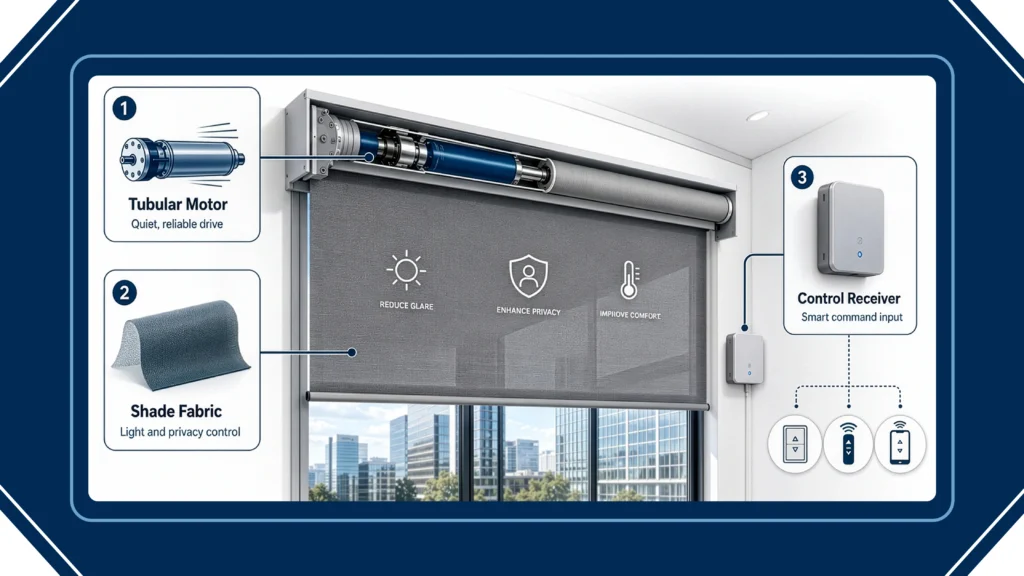
Although motorized shades appear simple from the outside, several components work together to deliver smooth, reliable performance.
Tubular Motor
The motor is the heart of the system. Installed discreetly inside the roller tube, the tubular motor provides the torque needed to move the shade fabric quietly and evenly. Commercial-grade motors are engineered for thousands of operating cycles each year, making them suitable for busy office buildings, healthcare facilities, educational campuses, and other high-use environments.
Unlike residential products, these motors are built for continuous operation and long-term reliability.
Shade Fabric
The motor powers the system, but the fabric determines how the shade performs. Commercial motorized systems can operate a wide range of window coverings, including:
- Roller shades
- Solar shades
- Blackout window treatments
- Dual-shade systems
The selected fabric controls daylight, glare, privacy, and solar heat gain, while the motor simply ensures consistent operation.
Control Receiver
Every motorized shade includes a receiver that interprets commands from the selected control method. Depending on the project, shades may be operated using:
- Wall-mounted switches
- Handheld remote controls
- Smartphone or tablet applications
- Building automation systems
- Sunlight and occupancy sensors
This flexibility allows facility teams to control a single shade, an entire conference room, or every window across multiple floors from one centralized system.
How Do Motorized Blinds Get Power?
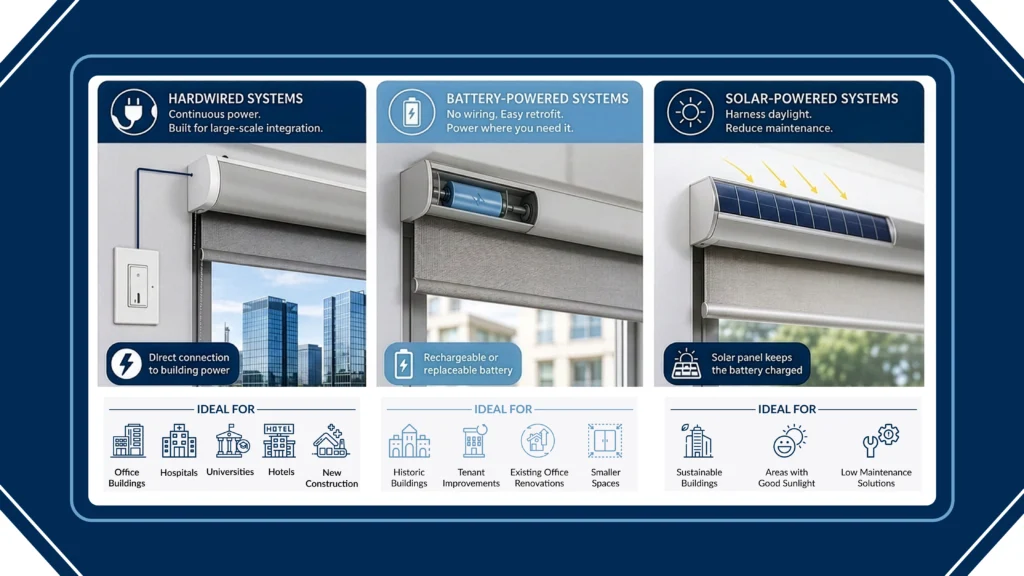
Another common question is whether motorized blinds require electrical wiring.
The answer depends on the installation. Commercial motorized shades are available with several power options, allowing them to be specified for both new construction and retrofit projects.
Hardwired Systems
Hardwired systems are the commercial standard. These shades connect directly to the building’s electrical system, providing a continuous power supply without the need for battery replacement. They’re highly recommended for:
- Office buildings
- Hospitals
- Universities
- Hotels
- New construction projects
- Major renovations
Hardwired systems also offer the most seamless integration with building management systems, making them the preferred choice for large commercial facilities.
Battery-Powered Motorized Blinds
For retrofit projects where running new electrical wiring would be disruptive or cost-prohibitive, battery-powered motorized blinds provide an excellent alternative.
The motor is powered by a rechargeable or replaceable battery pack hidden within the headrail or adjacent to the window. Battery-powered systems are often specified for:
- Historic buildings
- Tenant improvements
- Existing office renovations
- Smaller commercial spaces
While they require periodic battery replacement or charging, they eliminate the need for invasive electrical work.
Solar-Powered Motorized Blinds
Some motorized systems can also be paired with compact photovoltaic panels that continuously recharge the battery using available daylight.
These solar-powered motorized blinds reduce maintenance while providing an environmentally conscious solution for locations with adequate sun exposure.
Which Power Source Is Right for Your Project?
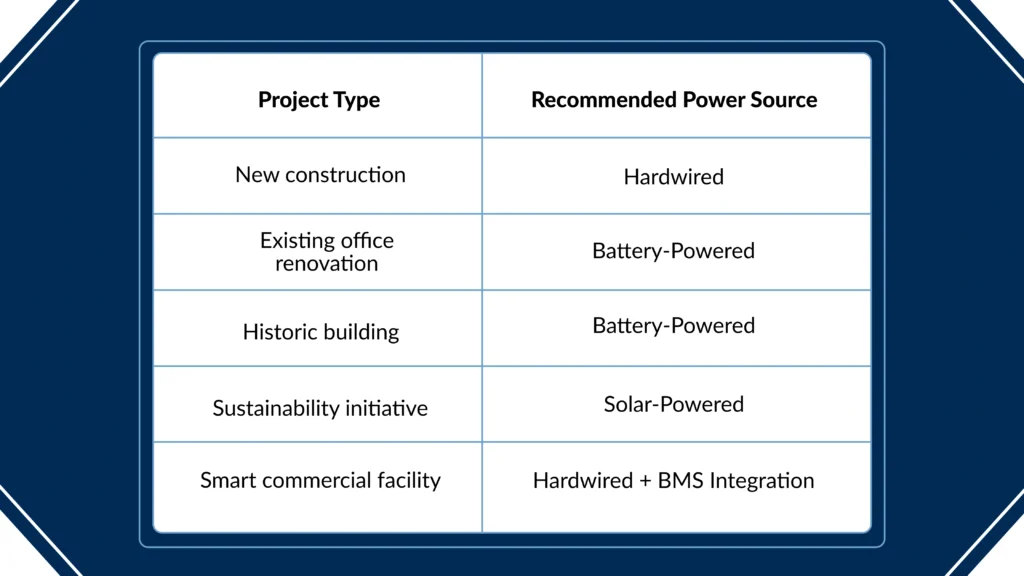
| Do Motorized Blinds Need to Be Plugged In? | People Also Ask Not necessarily. Most commercial installations are hardwired because they provide continuous power and support advanced automation. However, battery-powered motorized blinds and solar-powered motorized blinds are practical alternatives for retrofit projects where wiring is impractical or undesirable. |
How Commercial Motorized Shades Are Controlled
The motor powers the shade, but the control system determines when and how it operates. This is where commercial motorized shades go beyond simple automation and become part of a smarter building strategy.
Depending on the project requirements, motorized blinds can respond to manual commands, follow programmed schedules, or communicate directly with other building systems to optimize comfort and energy performance.
Remote Controls & Wall Switches
For many commercial spaces, the simplest control method is still the most effective.
Wall-mounted switches and handheld remotes allow occupants to raise or lower individual shades or control multiple window treatments simultaneously.
| How Do Motorized Blinds Work With a Remote? | People Also Ask When a button is pressed, the remote sends a wireless signal to the shade’s control receiver. The receiver activates the tubular motor, which rotates the roller tube and moves the fabric to the programmed position. |
Unlike manual shades, motor-driven shades stop precisely at preset upper and lower limits, ensuring smooth, consistent operation every time.
For conference rooms, executive offices, and meeting spaces, this provides instant light control without interrupting presentations or daily activities.
Smart Scheduling & Daylight Automation
One of the biggest advantages of commercial motorized shades is that they don’t always require manual operation. Instead, facilities can create schedules based on occupancy or time of day.
For example:
- East-facing shades automatically open in the morning to maximize daylight.
- West-facing shades lower during the afternoon to reduce solar heat gain.
- Conference room shades close automatically before scheduled presentations.
- All shades return to their default position after business hours.
By automating routine adjustments, facilities eliminate the need for occupants to constantly manage their window coverings.
Building Management System Integration
Modern building management system integration takes automation even further. Rather than functioning as standalone products, motorized shades can communicate directly with the building’s central management platform.
This allows multiple systems to work together, including:
- HVAC systems
- Lighting controls
- Occupancy sensors
- Daylight sensors
- Security schedules
For example, if daylight sensors detect excessive sunlight on a west-facing façade, the system can automatically lower the shades while adjusting interior lighting to maintain consistent illumination.
Instead of treating window shades as isolated products, they become an active component of the building’s energy management strategy.
Why Commercial Facilities Choose Motorized Shades
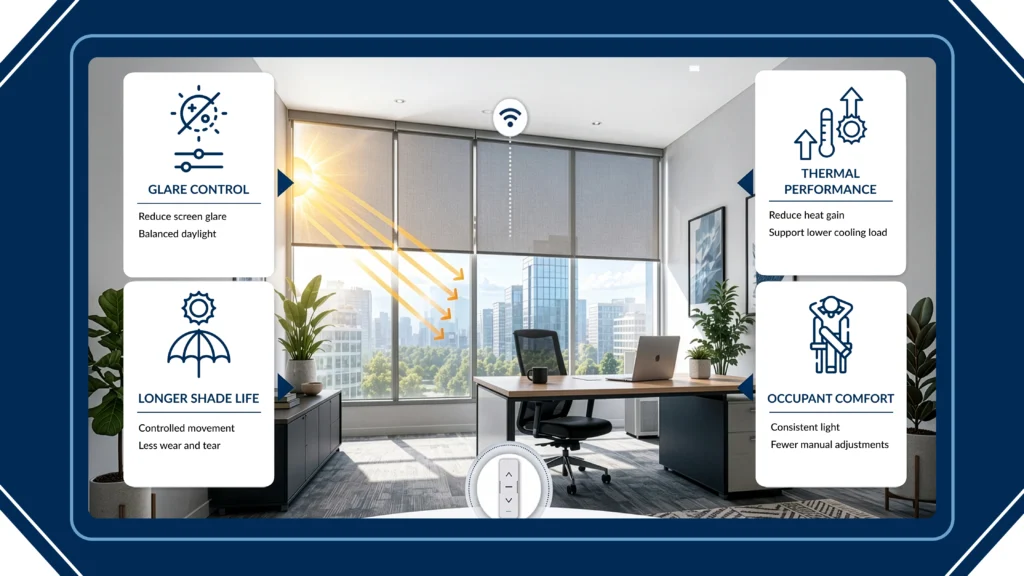
Motorization isn’t about replacing a pull chain with a remote control. It’s about improving the building’s daily performance.
Better Glare Control
Sunlight is one of the biggest contributors to workplace discomfort. Employees constantly adjusting blinds to see computer screens interrupts productivity and creates inconsistent lighting conditions throughout the office.
Automated shade systems continuously optimize daylight, providing effective glare reduction for offices without requiring occupant intervention. The result is a more comfortable workspace and fewer interruptions throughout the day.
Improved Thermal Performance
Windows are a significant source of solar heat gain, particularly on south- and west-facing façades. When shades automatically respond to changing sunlight conditions, they reduce the amount of heat entering the building before it affects indoor temperatures.
This helps:
- Reduce HVAC demand
- Improve occupant comfort
- Lower cooling costs
- Support more energy-efficient window coverings
Rather than reacting after temperatures rise, automated solar shading systems proactively manage heat gain throughout the day.
Moreover, properly specified motorized shades also support broader energy-efficiency strategies. ASHRAE Standard 90.1 recognizes the role of fenestration, daylighting, and shading in managing solar heat gain and improving commercial building performance.
Longer Shade Life
Manual shades experience wear every time someone pulls on a chain or operates a mechanism.
Over time, this can lead to:
- Uneven rolling
- Fabric damage
- Chain wear
- Misaligned shades
Motorized operation eliminates much of that variability. Because the motor moves the shade at a controlled speed and stops at precise positions, the fabric experiences less stress and more consistent operation throughout its service life.
Greater Occupant Comfort
Comfort isn’t just about temperature. It’s also about creating consistent lighting conditions throughout the day.
Motorized shades reduce:
- Excessive brightness
- Afternoon glare
- Constant manual adjustments
- Visual discomfort
For offices, healthcare facilities, educational buildings, and commercial spaces, these improvements create a more functional environment for occupants and facility teams alike.
Commercial vs. Residential Motorized Blinds
While residential motorized shades are designed for occasional daily use, commercial systems are engineered for high-frequency operation across larger, more demanding environments.
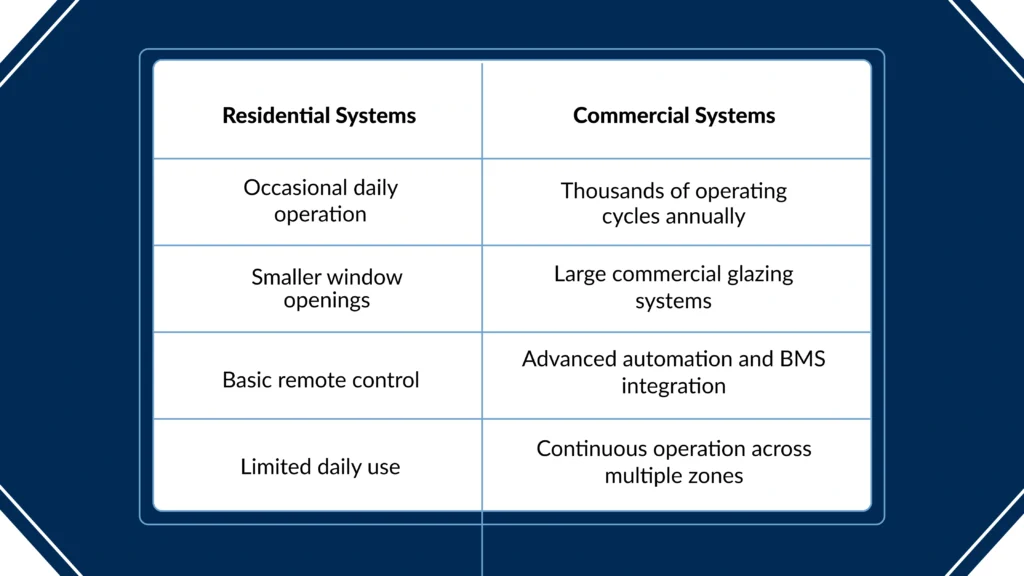
Consumer-grade motors may perform well in homes but are not designed for the operating demands of commercial buildings. Commercial motors deliver greater durability, precision, and long-term reliability.
Are Motorized Blinds Worth the Investment?
For many commercial facilities, motorized blinds are no longer viewed as a luxury upgrade; they’re an investment in building performance.
In environments where window coverings are adjusted multiple times a day, automation helps streamline operations while improving occupant comfort and energy efficiency.
By eliminating manual adjustments, commercial motorized shades provide more consistent glare control, reduce wear caused by daily handling, and support automated building operations.
Key benefits include:
- Reduced manual intervention for facility teams and occupants
- Consistent glare control throughout the day
- Improved energy management by minimizing solar heat gain
- Longer shade lifespan through controlled, hands-free operation
- Enhanced occupant comfort and workplace productivity
Things to Consider Before Investing
Like any building system, motorized shades require thoughtful planning to maximize their long-term value.
Considerations may include:
- Higher upfront investment than manual window treatments
- Electrical coordination for hardwired installations
- System programming and commissioning during installation
- Periodic battery replacement for battery-powered systems
For facilities focused on long-term operational efficiency, these initial considerations are often outweighed by lower maintenance demands, improved occupant comfort, and the performance benefits that automation delivers over the life of the system.
Why Commercial Facilities Choose Granite State Specialties
Successful motorized shade installations require more than quality products; they demand careful planning, technical expertise, and seamless execution.
Granite State Specialties partners with architects, contractors, facility managers, and property owners to deliver commercial motorized shades that integrate effortlessly into each building’s operational needs.
With GSS, you get:
- Expert product recommendations for your space and performance goals
- Precision field measurements for a perfect fit
- Electrical coordination for hardwired and automated systems
- Building Management System (BMS) integration
- Professional commercial installation for long-term reliability
Whether you’re automating a single room or an entire facility, GSS delivers motorized shading solutions that enhance comfort, efficiency, and building performance.
Get Commercial Motorized Blinds for Your Facility With Granite State Specialties
The right motorized shade system should do more than move with the push of a button. It should help reduce glare, improve occupant comfort, enhance energy efficiency, and adapt to your building’s daily operations.
Whether you’re designing a new commercial space, modernizing an existing facility, or planning a phased automation upgrade, choosing the right motorized shading solution starts with understanding your building’s unique needs.
Granite State Specialties works with facility teams to recommend commercial window treatment solutions that align with your operational goals, performance requirements, and long-term vision.
Ready to automate your facility’s solar control? Contact Granite State Specialties today to schedule a site assessment and discover the right motorized shading solution for your project.
Frequently Asked Questions
1. How do motorized blinds work?
Motorized blinds use a tubular motor housed inside the roller tube to automatically raise and lower the shade. The motor receives commands from wall switches, remotes, smartphone apps, or building automation systems, allowing for smooth, consistent operation without manual adjustment.
2. Do motorized blinds need to be plugged in?
Not always. While most commercial motorized blinds are hardwired for continuous power, battery-powered and solar-powered systems are also available for retrofit projects where running new wiring isn’t practical.
3. How do motorized blinds get power?
Commercial motorized blinds can be powered by hardwired electrical connections, rechargeable or replaceable batteries, or integrated solar panels that continuously charge the battery with daylight. The best option depends on the building type and installation requirements.
4. Can motorized blinds integrate with a Building Management System?
Yes. Many commercial motorized shade systems can integrate with Building Management Systems (BMS), allowing shades to operate automatically based on occupancy schedules, daylight conditions, HVAC strategies, or centralized facility controls.
5. Are motorized blinds worth the investment?
For commercial facilities, motorized blinds are often worth the investment because they improve glare control, support energy efficiency, reduce manual maintenance, and enhance occupant comfort. Over time, these operational benefits can outweigh the higher initial installation cost.