
Nearly three in four people say a dirty restroom gives them a negative view of a business, according to a Cintas Survey of 2,036 U.S. adults.
Restroom partitions shape that first impression, and the material you choose determines how it holds up over time. Choosing the right toilet partition material means balancing cost, durability, appearance, and maintenance. Powder-coated steel toilet partitions offer an affordable, versatile option for commercial restrooms, with a range of colors and a finish suited to everyday use.
They work well in many offices, schools, retail stores, and public buildings, but moisture exposure and heavy impacts can affect their long-term performance. Understanding these limitations helps specifiers make informed decisions before finalizing project requirements.
This blog covers the benefits, limitations, and best applications of powder-coated steel partitions to help architects, facility managers, contractors, and interior designers choose the right system for their projects.
| What Are Powder-Coated Steel Toilet Partitions? Powder-coated steel toilet partitions are commercial restroom stalls built from steel face sheets bonded to a lightweight core and finished with a baked-on powder coating. The coating adds color and a hard, wear-resistant surface. |
Doors, panels, pilasters, and headrails share the same finish, and the mounting style sets how the stalls anchor to the building. Granite State Specialties (GSS) offers four common styles: floor-to-ceiling, overhead-braced, ceiling-hung, and full privacy. Overhead braces are the most popular.
What Are the Pros of Powder-Coated Steel Partitions?
Powder-coated steel offers a cost-effective combination of durability, finish options, and easy maintenance, making it a practical choice for many commercial restrooms.
| Advantage | Why It Matters |
| Affordable upfront cost | Helps manage restroom construction budgets without sacrificing everyday functionality. |
| Wide color selection | Makes it easier to coordinate partitions with interior finishes and design palettes. |
| Durable finish | Resists everyday scuffs, staining, and wear when properly maintained. |
| Easy cleaning | Supports routine restroom maintenance with simple cleaning practices. |
| Flexible mounting styles | Available in major configurations to suit different restroom layouts and installation requirements. |
These benefits make powder-coated steel a strong option for high-traffic restrooms in schools, offices, and public facilities where moisture exposure is manageable.
What Are the Limitations of Powder-Coated Steel?
Powder-coated steel provides corrosion protection through its finish, but it is not completely rustproof. Understanding its limitations helps specifiers determine whether it suits the intended environment.
| Limitation | What It Means | How to Address It |
| Finish damage | Deep scratches or chips can expose the underlying steel to moisture, increasing the risk of corrosion. | Inspect the finish regularly and address damage according to the manufacturer’s recommendations. |
| Impact damage | Strong impacts can leave visible dents or damage the coating. | Consider expected traffic and impact exposure when selecting a partition system. |
| Constant moisture exposure | Areas with frequent washdowns, standing water, or persistent moisture may require a different material. | Consider solid HDPE partitions for pools, showers, and other consistently wet environments. |
| Design preferences | Some premium interiors may call for stainless steel’s metallic appearance rather than a colored finish. | Compare finish options against the project’s design and budget requirements. |
Powder-coated steel remains a practical choice for many commercial restrooms when specified for suitable conditions and maintained properly. For consistently wet environments, GSS’s moisture-resistant HDPE partitions may be a better fit.
Powder-Coated Steel vs Stainless Steel vs Phenolic vs HDPE
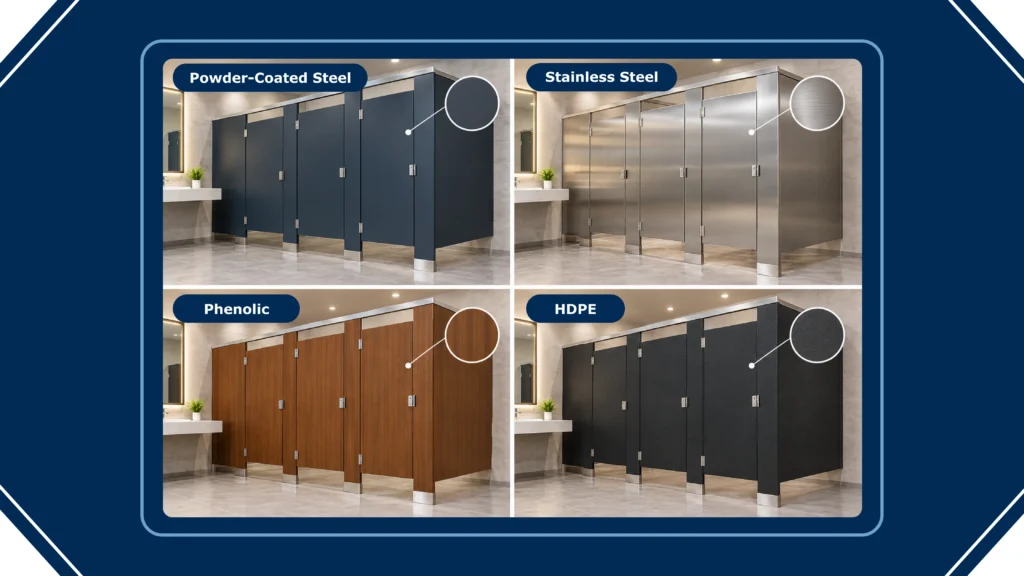
Powder-coated steel is the lowest-cost option in most comparisons, while stainless steel, phenolic, and HDPE cost more for better moisture or impact performance.
| Material | Powder-Coated Steel | Stainless Steel | Phenolic |
| Moisture Performance | Good while the coating is intact | Corrosion resistant | Water-, impact-, and graffiti-resistant |
| Typical Cost | Lowest | Highest | Mid to high |
| Best For | Dry offices, schools, retail | High-end corporate restrooms | Demanding commercial use |
| Material | Powder-Coated Steel | Stainless Steel | Phenolic |
Cost positions vary by manufacturer, thickness, and project size.
Stainless steel toilet partitions cost more, but they resist corrosion and can be buffed to remove light scratches. They suit premium corporate restrooms. Powder-coated steel suits projects that need to stretch the budget across many commercial restroom stalls.
Where Do Powder-Coated Steel Partitions Work Best?
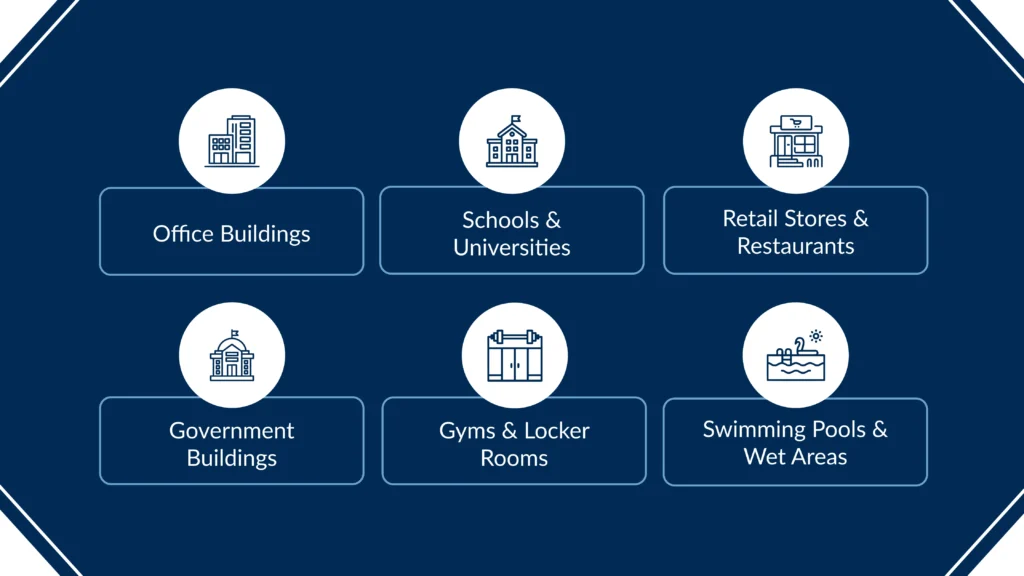
Powder-coated steel toilet partitions suit commercial restrooms with steady foot traffic and manageable moisture levels. Their affordability, color options, and easy maintenance make them practical for several settings.
- Office Buildings: Maintain a clean, professional appearance while keeping restroom costs manageable.
- Schools & Universities: Durable panels and straightforward maintenance handle frequent daily use.
- Retail Stores & Restaurants: Provide an attractive, easy-to-clean solution for customer-facing restrooms.
- Government Buildings: Balance durability, budget, and functionality in public restrooms.
- Gyms & Locker Rooms: Work well in relatively dry restroom areas, but may be less suitable near showers or where moisture is persistent.
- Swimming Pools & Wet Areas: Solid HDPE partitions are generally worth considering because they resist moisture and corrosion.
The best choice depends on traffic, moisture exposure, cleaning routines, and budget. Matching the material to the environment helps ensure reliable performance over time.
What Should You Check Before Choosing Partitions?
Material is only one part of the decision. The stall layout, accessibility requirements, hardware, and finished dimensions all need to be checked before ordering. This is where the specifier plays an important role.
| Who Is a Specifier? | Quick Question A specifier is a professional who is responsible for defining the products, materials, performance requirements, and installation details in construction documents. For toilet partitions, the specifier helps ensure the selected system meets the project’s design, durability, and accessibility requirements. |
Material is only one decision a specifier makes. The stall layout must meet accessibility rules, no matter what the panels are made of. The 2010 ADA Standards, Section 604.8, set the key dimensions for toilet compartments.
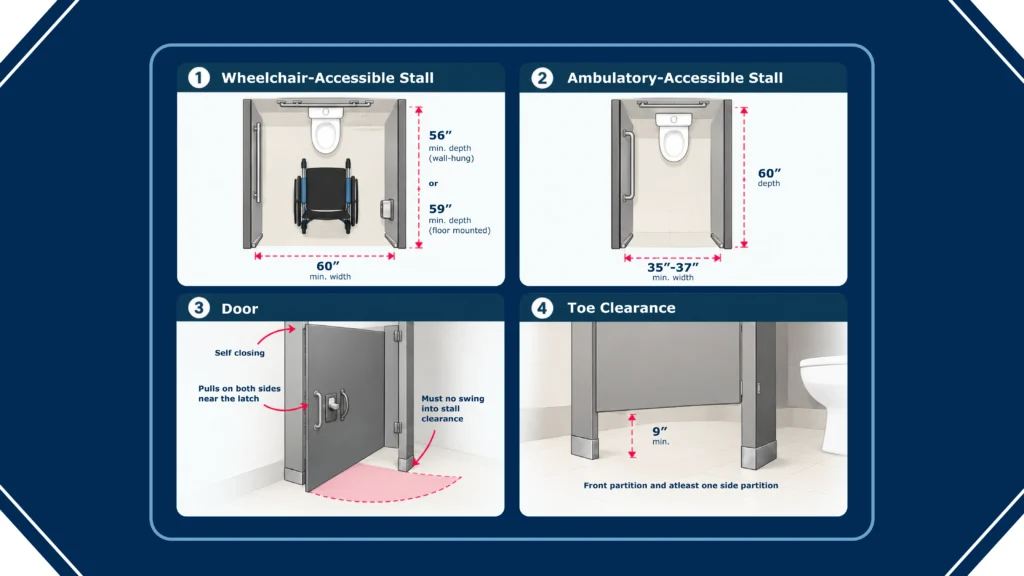
Confirm finished stall dimensions against the plans before ordering, and specify suitable corrosion-resistant hardware to support long-term performance.
| Where Do Toilet Partitions Fall in Construction Specifications? | Quick Question In CSI MasterFormat, toilet compartments fall under Section 10 21 13 in Division 10 Specialties. Restroom accessories such as dispensers, grab bars, and waste receptacles sit under Section 10 28 00, Toilet, Bath and Laundry Accessories. Specifiers use these numbers to organize drawings, specifications and bid packages, so every contractor prices the same scope. Panel material, finish, and hardware belong under Products, and mounting under Execution. New to the numbering? Read our guide to CSI Division 10. |
7 Things to Consider When Specifying Powder-Coated Steel Toilet Partitions
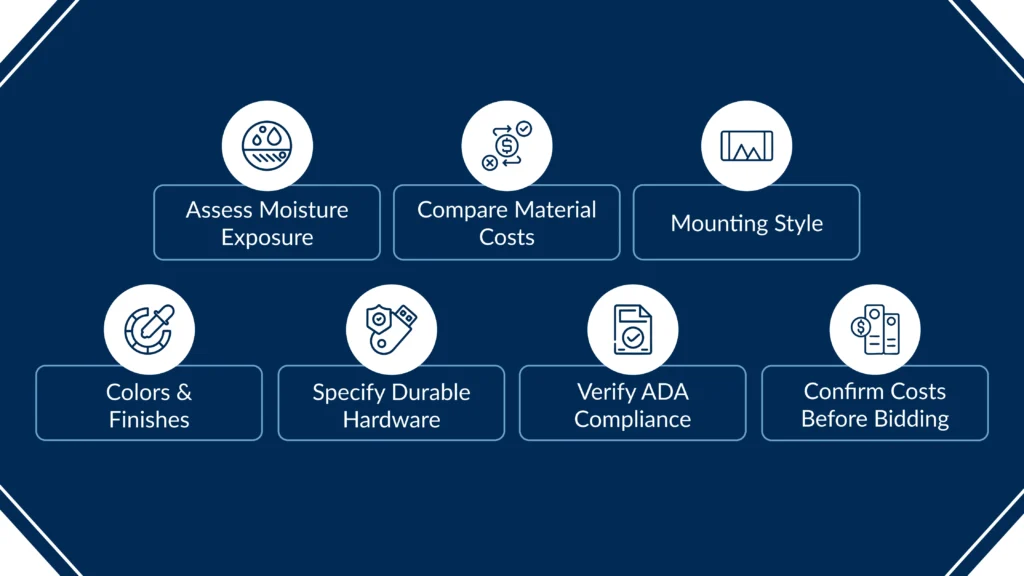
The right partition system depends on your restroom’s moisture levels, traffic, budget, and design requirements. Consider these factors before finalizing your specifications to ensure the selected system meets your facility’s needs.
- Assess Moisture Exposure: Powder-coated steel suits many dry and moderately damp restrooms. For consistently wet environments, consider HDPE or phenolic partitions.
- Compare Material Costs: Evaluate powder-coated steel, stainless steel, phenolic, and HDPE based on upfront costs, maintenance, and expected service life.
- Mounting Style: Overhead-braced systems offer a common, practical option, while ceiling-hung partitions leave the floor clear for cleaning.
- Colors & Finishes: Match partition colors with restroom accessories, fixtures, and surrounding interior finishes.
- Specify Durable Hardware: Choose suitable hinges, latches, and pulls, and confirm accessibility requirements for the selected system.
- Verify ADA Compliance: Check compartment dimensions, door swings, and toe clearance against applicable ADA requirements, including Section 604.8 where relevant.
- Confirm Costs Before Bidding: Request material takeoffs and installation pricing early to help define the project scope and budget.
How Do GSS Partition Installations Support Commercial Restroom Projects?
GSS supplies and installs major toilet partition brands, including Bobrick and ASI Global, so one team can carry a restroom from takeoff to final install. See the full range here: toilet partitions, or browse completed GSS projects to see how these systems look once installed.
GSS partition installations help project teams in these ways.
- Estimating and material takeoffs from the plans
- Procurement and logistics handled through delivery
- Installation by crews with at least 30 hours of OSHA training
- Support matching partitions to the rest of the washroom
The washroom does not end at the stall. GSS also supplies dispensers, waste receptacles, hand dryers, and heavy-duty stainless steel grab bars in black and custom powder-coated finishes. Browse the GSS restroom accessories to coordinate finishes with your partitions.
Plan Your Next Commercial Restroom Project With GSS
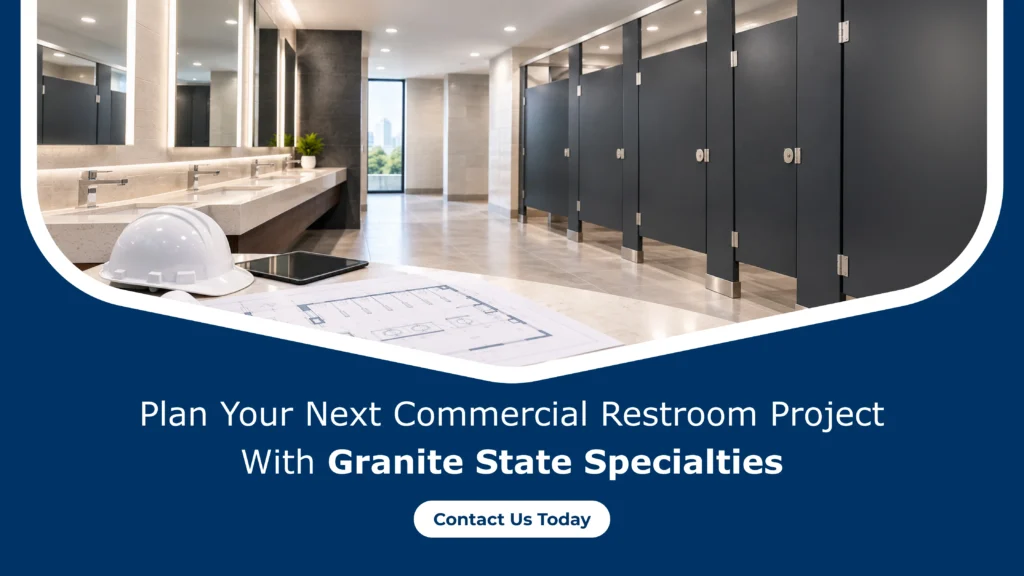
Choosing the right partition system means balancing durability, design, maintenance, and budget with your facility’s needs. The right materials, mounting style, and installation help ensure your restroom performs well day after day.
Granite State Specialties helps project teams coordinate commercial toilet partitions and installation requirements. Contact GSS for expert guidance, material takeoffs, and professional installation for your next project.
Frequently Asked Questions
What are powder-coated steel toilet partitions?
These are commercial restroom stalls made from steel face sheets, usually galvanized, with a lightweight core and a baked-on powder finish. They are one of the most economical options for offices, schools, and retail restrooms, and they come in many colors and mounting styles.
Are powder-coated steel toilet partitions rust-resistant?
They resist rust as long as the coating stays intact, but they aren’t rustproof. A deep scratch or chip can expose the steel to moisture. Dry and moderately damp restrooms are fine. HDPE or phenolic works better for pools, showers, and locker rooms.
Which is better, powder-coated steel or stainless steel toilet partitions?
Neither is better everywhere. Powder-coated steel costs less and offers more color choice, which suits budget-driven projects. Stainless steel toilet partitions resist corrosion and offer a premium look, making them ideal for high-end corporate restrooms. Match your choice to your budget, moisture levels, and finish expectations.
What is the best material for a high-traffic restroom?
It depends on moisture and abuse. Powder-coated steel works well as heavy-duty bathroom partitions in dry, high-traffic restrooms where budget matters. Solid HDPE and phenolic handle moisture, impact, and graffiti better, so they are the safer pick for pools, locker rooms, and restrooms with heavy abuse.
Do powder-coated steel toilet partitions meet ADA requirements?
Material does not decide ADA compliance. The stall layout does. The 2010 ADA Standards set stall size, door swing, self-closing doors, and toe clearance in Section 604.8, so confirm these against the plans for any partition layout.