Choosing between blinds vs shades vs curtains goes beyond appearance. In commercial facilities, the right window covering impacts occupant comfort, privacy, glare control, maintenance, and energy performance.
According to industry research, buildings that effectively use daylight harvesting technologies can achieve an average annual lighting energy savings of 24%, demonstrating how proper window management contributes to operational efficiency.
This blog compares blinds vs shades vs curtains to help facility managers, healthcare administrators, interior designers, and contractors choose the best solution for their commercial environment.
What are Blinds, Shades, and Curtains?
Although blinds, shades, and curtains all control light and privacy, they operate differently for different facility requirements. Understanding these distinctions is the first step when evaluating blinds vs shades vs curtains for a commercial project.
Blinds
Blinds use horizontal or vertical slats made from aluminum, vinyl, composite materials, or wood. The slats can be tilted to control daylight while maintaining privacy, making blinds ideal for spaces that require adjustable light throughout the day.
Commercial blinds feature reinforced hardware for frequent use in offices, schools, government buildings, and other high-traffic facilities. Their smooth surfaces also make routine cleaning simple.
Advantages:
- Adjustable light and privacy control
- Durable commercial-grade construction
- Easy to clean and maintain
- Suitable for offices, schools, and institutional buildings
Shades
Shades use a continuous fabric panel that raises or lowers as one piece. Popular commercial options include roller, solar, and cellular shades. Solar shades reduce glare while preserving outdoor views, while cellular shades improve insulation and energy efficiency.
Many commercial shade systems support motorization and building automation, making them a practical choice for modern facilities.
Advantages:
- Reduces glare and manages daylight
- Improves energy efficiency
- Clean, modern appearance
- Compatible with automated controls
Curtains
Commercial curtains focus on privacy, space division, and specialized light control rather than decoration. They are widely used in healthcare facilities, laboratories, changing rooms, and educational spaces.
Options include cubicle curtains with antimicrobial fabrics, blackout curtains for complete light control, and divider curtains that create temporary partitions.
Advantages:
- Provides privacy and flexible space division
- Available in antimicrobial and blackout fabrics
- Can meet commercial fire safety requirements
- Ideal for healthcare and institutional environments
Many commercial curtains are manufactured using fire-retardant window coverings that comply with building safety requirements such as NFPA 701. Their ability to provide flexible space management while meeting strict performance standards makes them a valuable solution for hospitals, educational institutions, laboratories, and other specialized environments.
Blinds vs. Shades vs. Curtains: Side-by-Side Comparison
Each option in the blinds vs shades vs curtains comparison performs differently depending on the facility’s operational priorities. Comparing their core characteristics makes it easier to identify which solution aligns with your project’s requirements.
| Feature | Blinds | Shades | Curtains |
| Material | Aluminum, vinyl, composite, wood | Fabric | Fabric |
| Light Control | Adjustable slats | Light filtering | Blackout or light blocking |
| Privacy | Adjustable | Consistent | High |
| Durability | Excellent | High | Moderate to High |
| Maintenance | Easy to clean | Low maintenance | Regular laundering/replacement |
| Fire-Rated Options | Available | Available | NFPA 701 options |
| Energy Efficiency | Moderate | Excellent | Fabric-dependent |
| Best For | Offices, schools, government | Offices, healthcare, classrooms | Hospitals, labs, institutions |
Each solution excels in different situations. Blinds provide the greatest flexibility for directing natural light; shades deliver superior glare control and energy performance, while curtains remain the preferred choice when privacy, space division, or specialized healthcare applications take priority.
Commercial Performance Factors That Matter
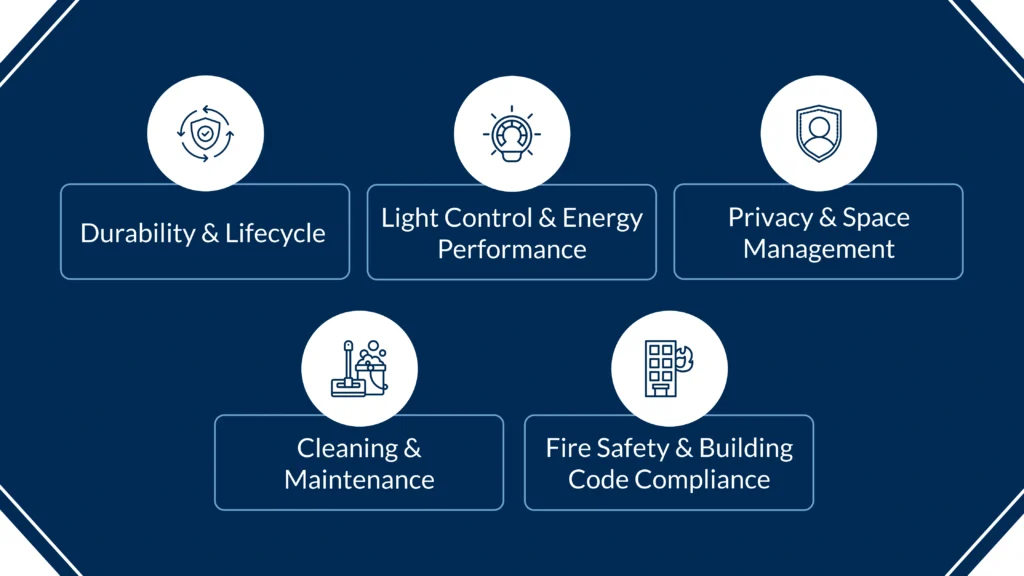
Selecting between blinds vs shades vs curtains requires more than comparing materials. Commercial facilities demand products that can withstand constant use while meeting operational, maintenance, and safety expectations.
Durability & Lifecycle
Commercial window coverings must withstand frequent daily use in offices, schools, healthcare facilities, and other high-traffic spaces. Commercial blinds feature reinforced hardware, shades use durable fabrics and roller systems, and commercial curtains are built for repeated cleaning and replacement.
Choosing commercial-grade products helps reduce maintenance, extend product life, and lower long-term costs.
Light Control & Energy Performance
Effective window coverings balance natural light with occupant comfort. Blinds provide precise daylight control through adjustable slats, while solar and cellular shades reduce glare and improve energy efficiency.
Curtains are best suited for complete privacy or blackout applications where full light control is required.
Privacy & Space Management
Different facilities have different privacy needs. Blinds allow adjustable visibility while preserving daylight, shades provide consistent privacy with a clean appearance, and curtains are ideal for creating temporary partitions in healthcare, educational, and institutional settings.
Cleaning & Maintenance
Maintenance requirements vary by product. Blinds are easy to wipe clean, shades require occasional fabric cleaning, and curtains often need regular laundering or replacement, especially in healthcare environments.
Fire Safety & Building Code Compliance
Commercial window treatments should meet applicable fire safety requirements. Fire-retardant window coverings help support building code compliance, improve occupant safety, and simplify long-term facility management.
Best Window Covering for Different Commercial Environments
The best choice in the blinds vs shades vs curtains comparison depends on how the space functions every day.
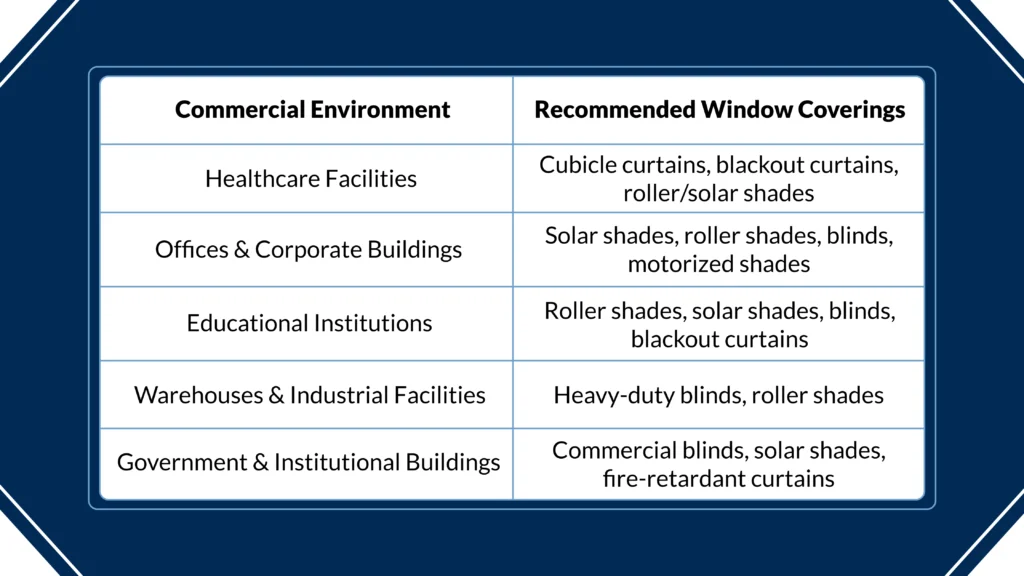
Healthcare Facilities
Healthcare spaces require window coverings that support privacy, hygiene, and frequent use. Cubicle curtains are widely used to create flexible patient partitions, while blackout curtains help control light in recovery rooms. Waiting areas and offices often benefit from roller or solar shades that reduce glare and improve comfort.
Recommended solutions:
- Cubicle curtains for patient privacy
- Blackout curtains for recovery rooms
- Roller or solar shades for offices and waiting areas
- Fire-retardant fabrics that meet NFPA 701 requirements
Offices & Corporate Buildings
Offices need window coverings that reduce glare, improve comfort, and support energy efficiency. Solar shades are ideal for workspaces, blackout shades work well in conference rooms, and blinds provide adjustable privacy for executive offices. Motorized systems can further improve daylight management.
Recommended solutions:
- Solar shades for workspaces
- Roller or blackout shades for conference rooms
- Blinds for adjustable privacy
- Automated shade systems for energy management
Educational Institutions
Schools and universities need durable window coverings that manage daylight and reduce glare. Roller shades are commonly used in classrooms, solar shades suit computer labs, and blackout curtains or shades support presentations in lecture halls.
Recommended solutions:
- Roller shades for classrooms
- Solar shades for computer labs
- Blinds for offices
- Blackout curtains for media rooms and auditoriums
Warehouses & Industrial Facilities
Industrial spaces prioritize durability and easy maintenance. Heavy-duty blinds perform well in high-use environments, while roller shades help control glare where needed. Curtains are typically reserved for specialized partitioning.
Recommended solutions:
- Heavy-duty blinds for operational areas
- Roller shades for glare control
- Commercial-grade hardware for frequent use
Government & Institutional Buildings
Public facilities require durable, code-compliant window coverings that balance privacy and light control. Commercial blinds are a reliable choice for offices, solar shades reduce glare in public spaces, and fire-retardant curtains are used where required.
Recommended solutions:
- Commercial blinds for administrative areas
- Solar shades for public spaces
- Fire-retardant curtains where required
- Commercial-grade hardware for long-term durability
How to Choose the Right Commercial Window Treatment
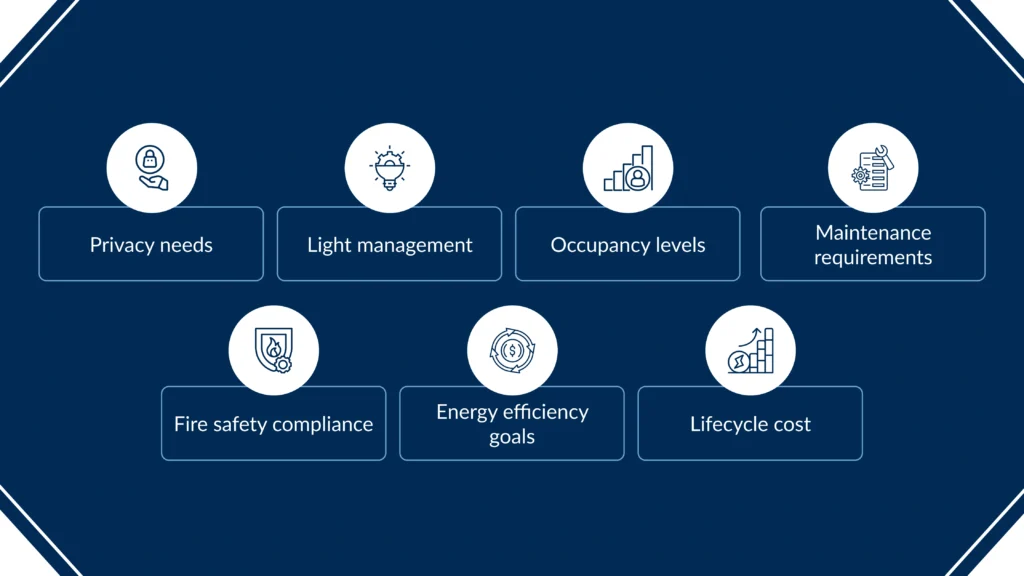
Looking beyond appearance helps facilities select systems that provide long-term value rather than short-term convenience.
When evaluating blinds vs shades vs curtains, consider the following factors:
- Privacy needs: Determine whether the space requires adjustable visibility, complete blackout, or temporary partitioning.
- Light management: Consider how much natural light enters the space and whether the priority is glare reduction or daylight preservation.
- Occupancy levels: High-traffic areas benefit from commercial-grade systems built for frequent daily operation.
- Maintenance requirements: Choose products that align with cleaning schedules, replacement cycles, and available maintenance resources.
- Fire safety compliance: Verify that fabrics and materials meet applicable standards such as NFPA 701.
- Energy efficiency goals: Solar and cellular shades can help reduce heat gain and improve HVAC performance.
- Lifecycle cost: Products with higher upfront quality often reduce maintenance and replacement expenses over time.
Evaluating these factors early in the specification process helps facility managers avoid costly replacements and ensures the selected solution performs as expected throughout its service life.
Why Commercial-Grade Window Coverings Make a Difference
Commercial buildings place far greater demands on window coverings than residential spaces. Products may be operated dozens of times each day, exposed to continuous sunlight, or required to comply with strict building codes. Consumer-grade products often aren’t created for these conditions.
Commercial-grade systems offer several performance advantages:
- Heavy-duty operating mechanisms built for high-frequency use.
- Commercial-quality fabrics and materials that resist wear, fading, and damage.
- Code-compliant construction, including fire-retardant window coverings where required.
- Greater compatibility with motorized controls and building automation systems.
- Longer service life, reducing replacement frequency, and maintenance costs.
- Improved facility window management through reliable, consistent performance.
Choosing commercial-grade products helps facilities maximize operational efficiency while reducing long-term ownership costs.
How GSS Helps Facilities with the Right Window Coverings
Selecting the right window covering is only part of the process. Facilities also need products engineered for commercial performance, safety, and long-term reliability. Granite State Specialties (GSS) provides a comprehensive portfolio of commercial window and partition systems to meet the demands of healthcare, education, corporate, government, and institutional environments.
Commercial Window Treatments
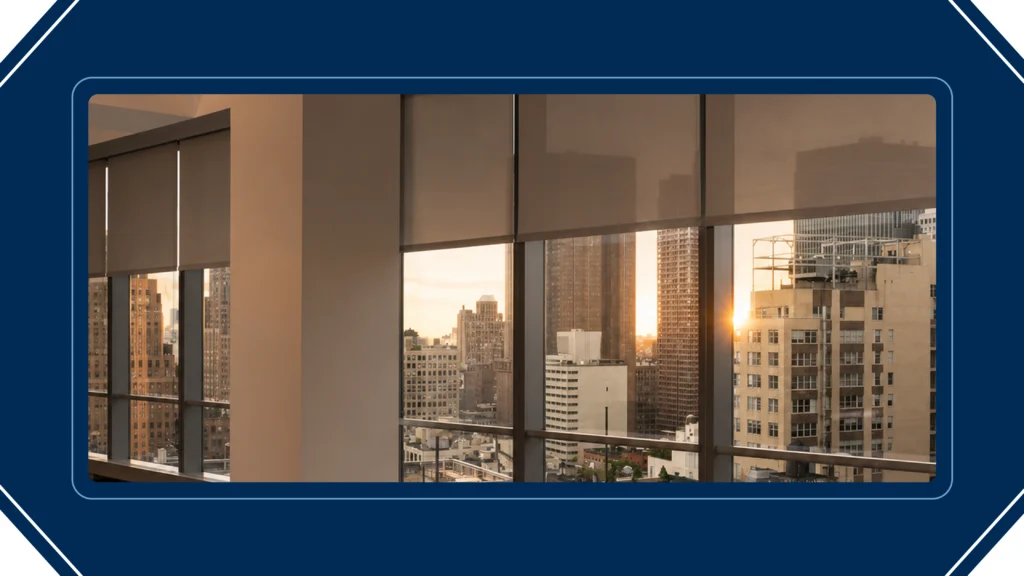
GSS offers commercial window treatment solutions that help facilities manage daylight, reduce glare, improve energy efficiency, and support occupant comfort. Options include roller shades, solar shades, and other performance-driven systems for high-frequency commercial use.
Cubicle Curtains
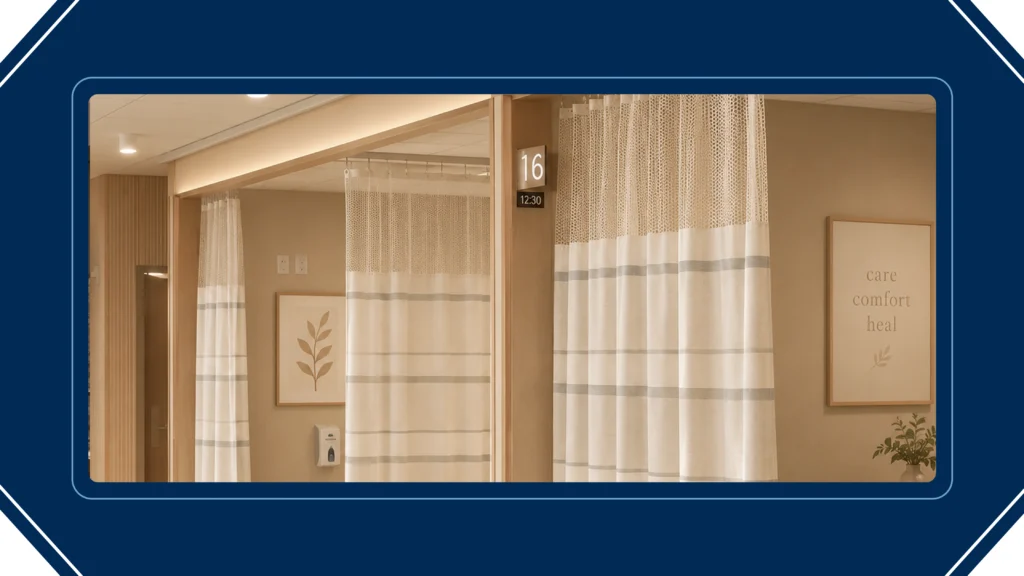
Healthcare facilities depend on durable, easy-to-maintain privacy solutions. GSS cubicle curtains are available with antimicrobial fabrics and commercial-grade track systems, making them well-suited for patient rooms, treatment areas, and other healthcare environments.
Code-Compliant Commercial Solutions
Every facility has unique operational and regulatory requirements. GSS supplies commercial-grade products that support building code compliance, including NFPA 701-compliant fire-retardant window coverings, while helping procurement teams identify solutions that align with their facility’s performance goals.
Choose Commercial Window Coverings Built for Long-Term Performance from GSS
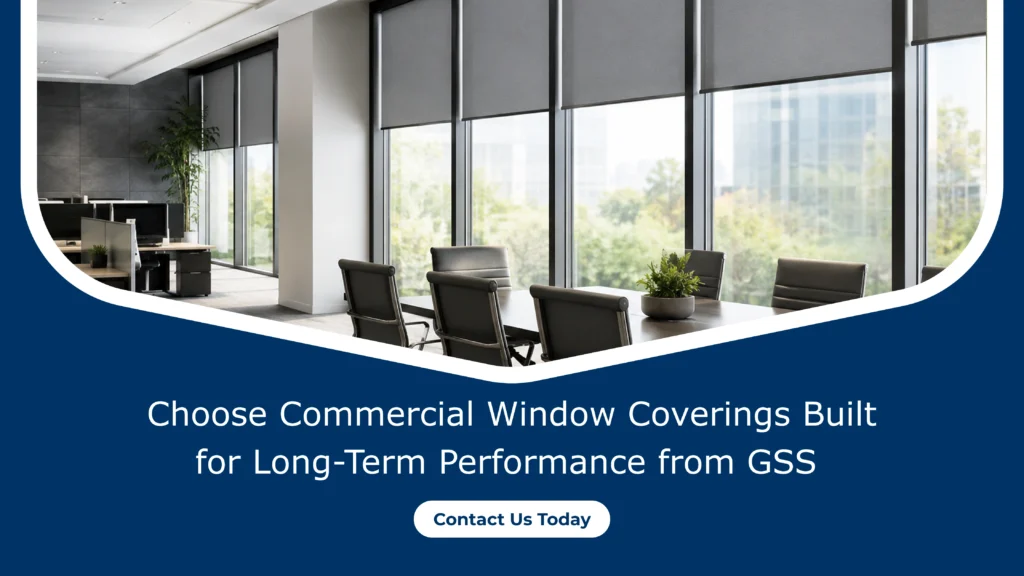
Investing in commercial-grade systems helps facilities achieve better performance, longer product life, and greater compliance with industry standards. Whether you’re specifying commercial window treatments, comparing cubicle curtains vs shades, or evaluating fire-retardant window coverings, selecting the right solution today can reduce maintenance costs and improve occupant experiences for years to come.
GSS provides commercial window and partition solutions for the demands of healthcare, education, corporate, government, and institutional environments.
From durable window treatments and privacy curtains to code-compliant systems built for high-frequency use, GSS helps facilities implement solutions that support long-term performance, operational efficiency, and regulatory compliance.
Ensure your facility meets code and stands the test of time. Request a quote from GSS for expert consultation on commercial window and partition systems.
Frequently Asked Questions
1. What is the difference between blinds, shades, and curtains?
Blinds use adjustable slats for light and privacy control. Shades use a fabric panel to filter or block light, while curtains provide privacy, room separation, or blackout coverage.
2. Which is better for commercial buildings: blinds, shades, or curtains?
The best option depends on the application. Blinds offer adjustable light control, shades reduce glare and improve energy efficiency, and curtains are ideal for privacy and space partitioning.
3. Are commercial window coverings required to meet fire safety standards?
Many commercial buildings require fire-retardant window coverings that comply with standards such as NFPA 701 to support safety and code compliance.
4. What are the best window coverings for healthcare facilities?
Cubicle curtains are commonly used for patient privacy, while roller or solar shades help control daylight and glare in offices and waiting areas.
5. How do I choose the right commercial window treatment for my facility?
Consider your privacy, light control, maintenance, energy efficiency, and building code requirements to select the most suitable commercial solution.